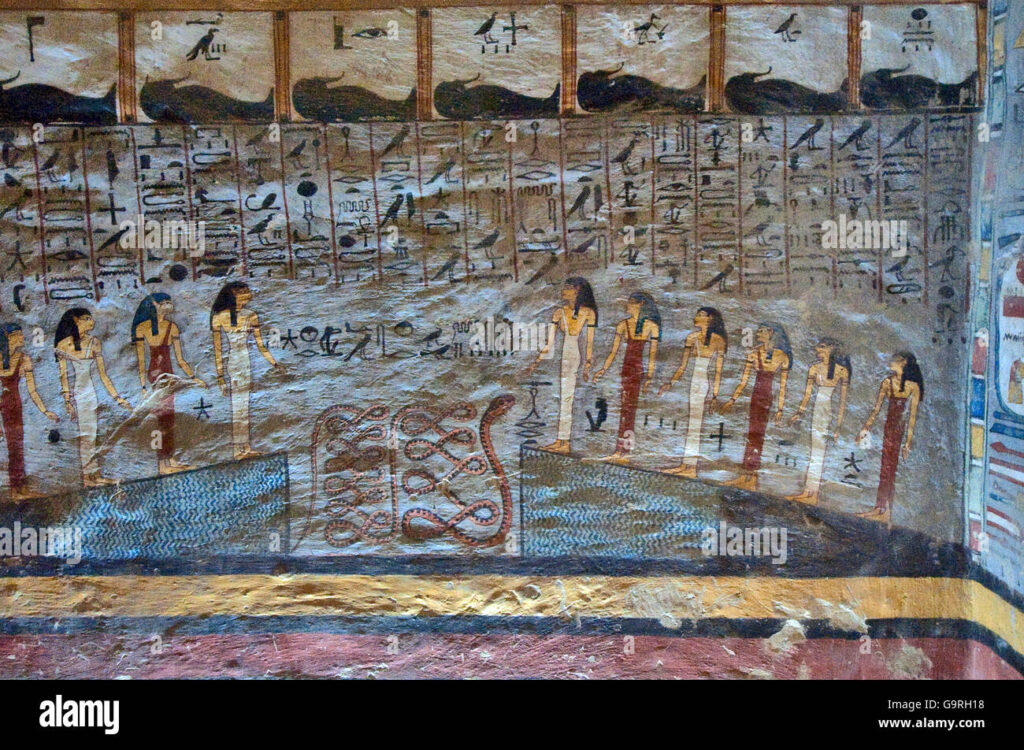
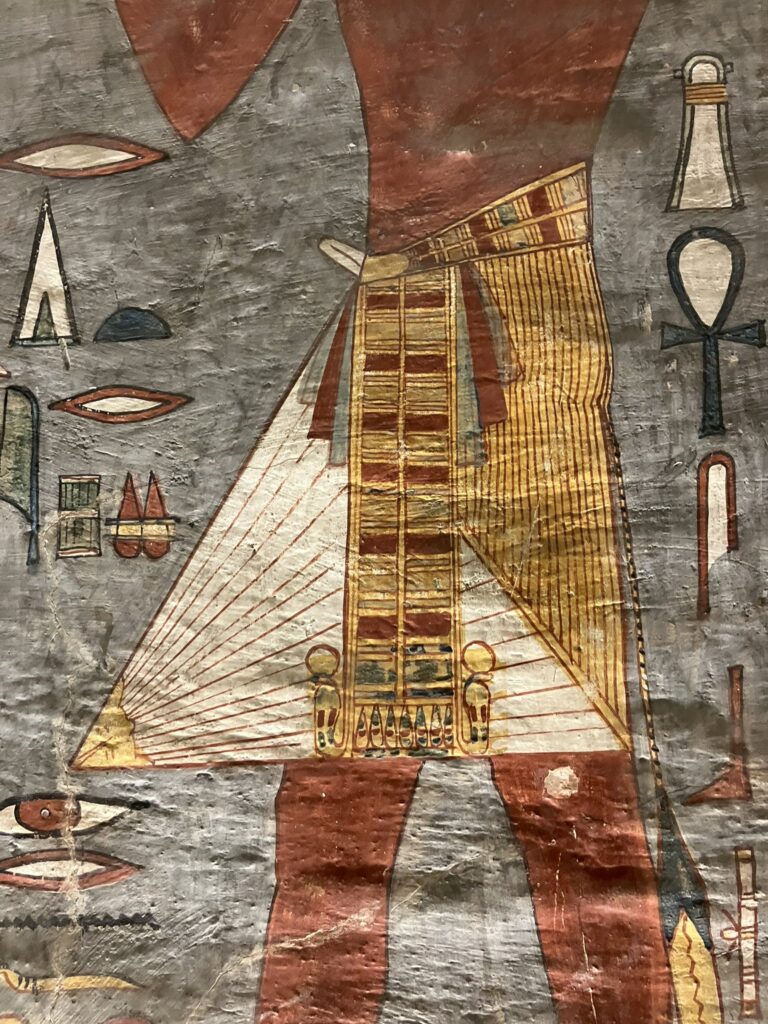
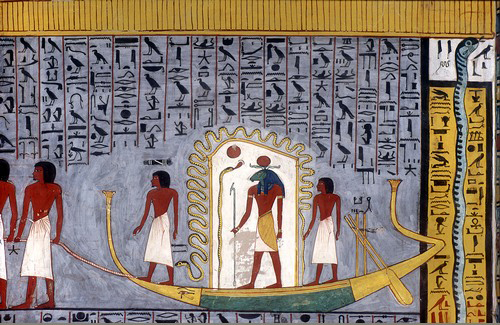
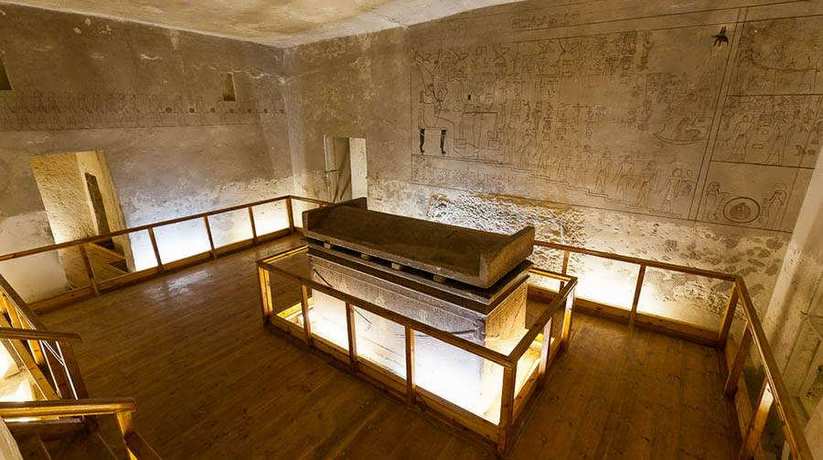
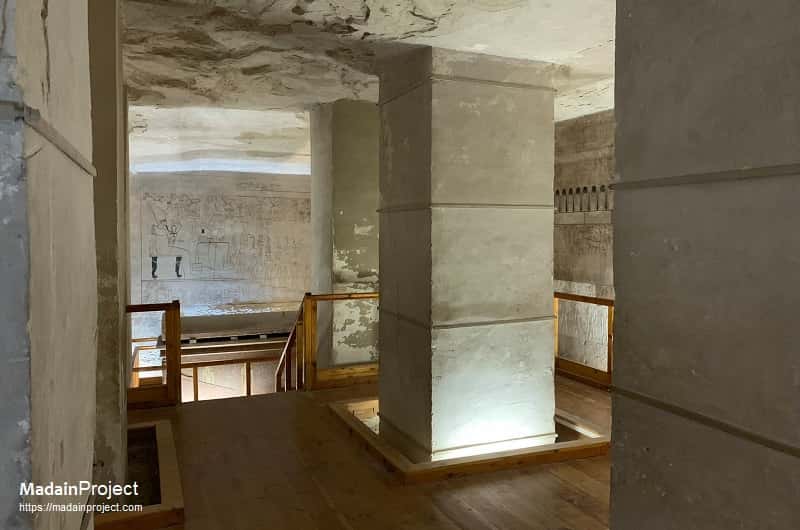
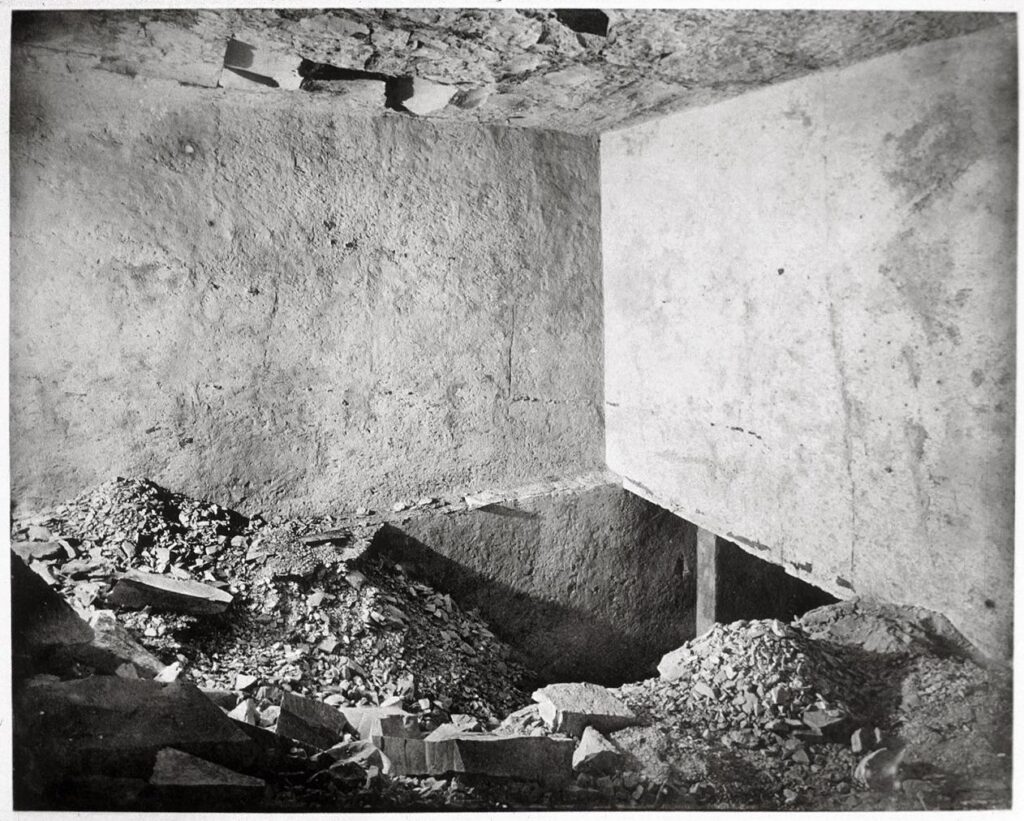
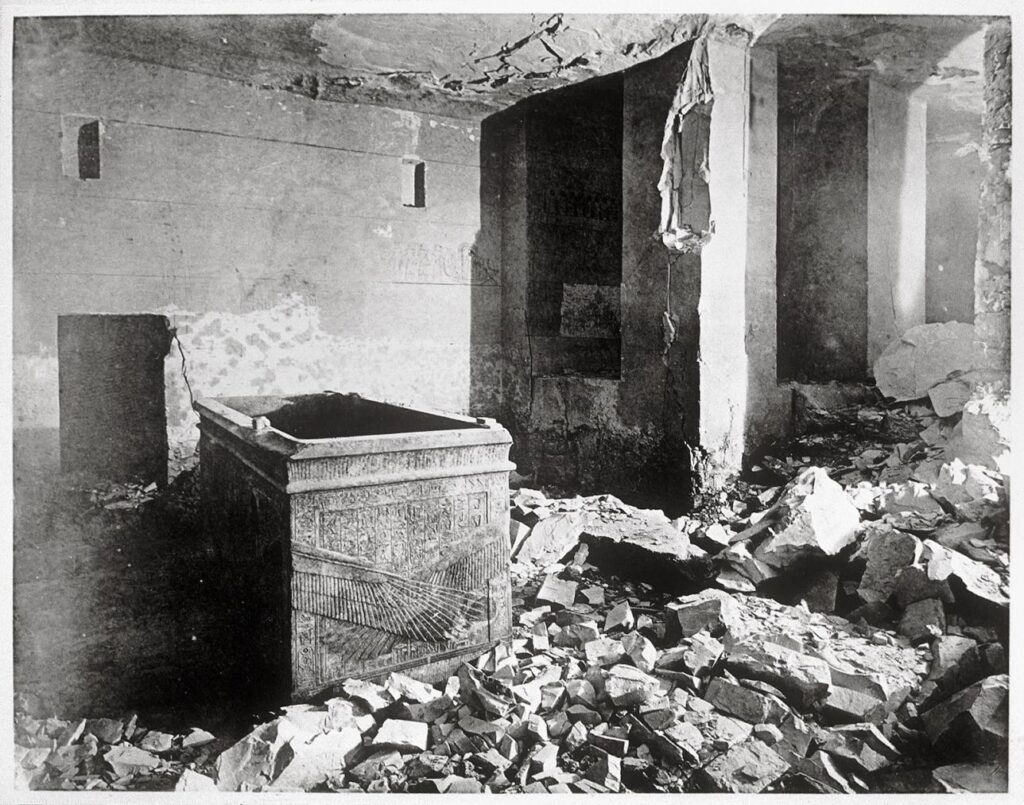
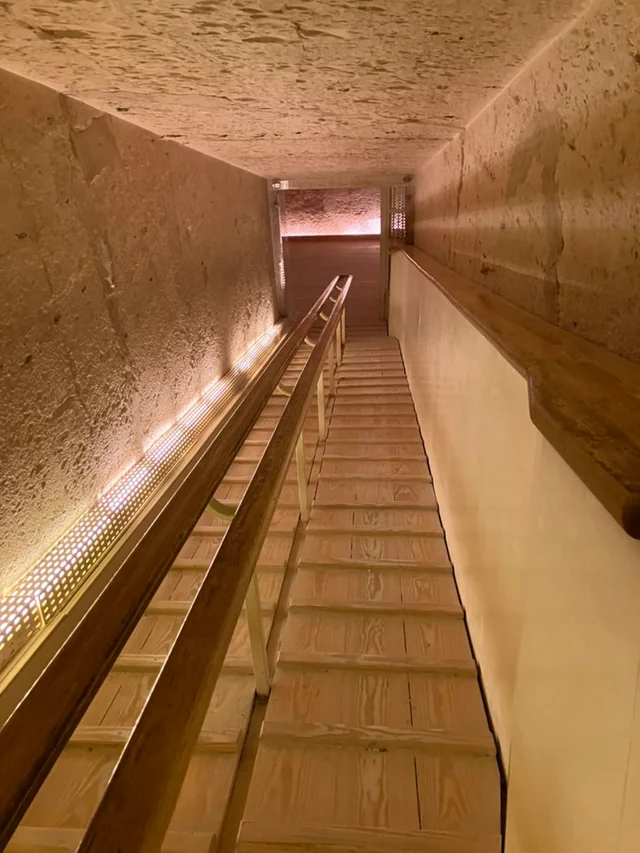
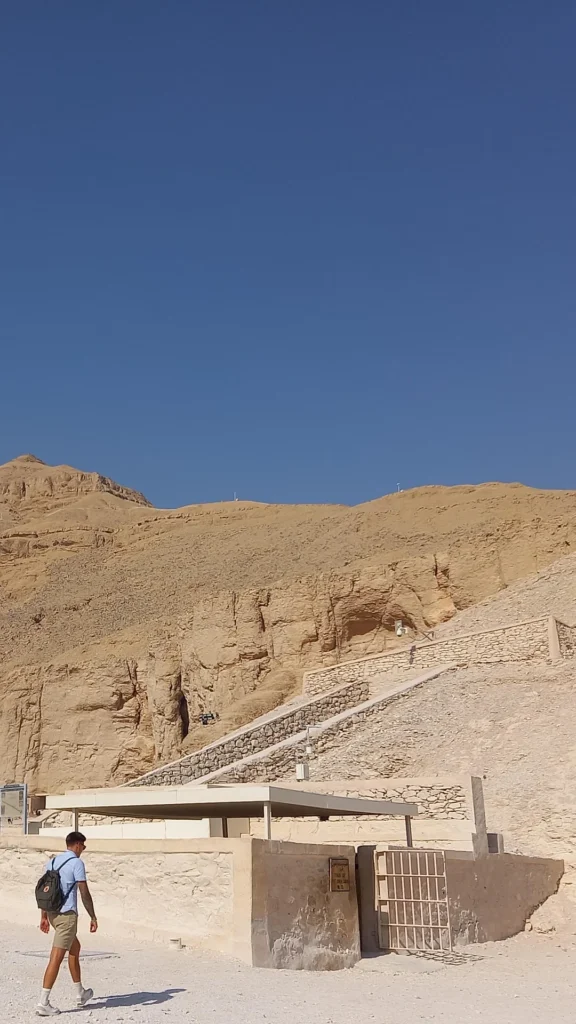
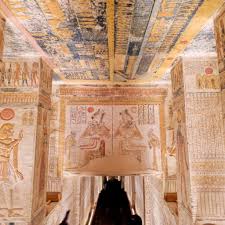
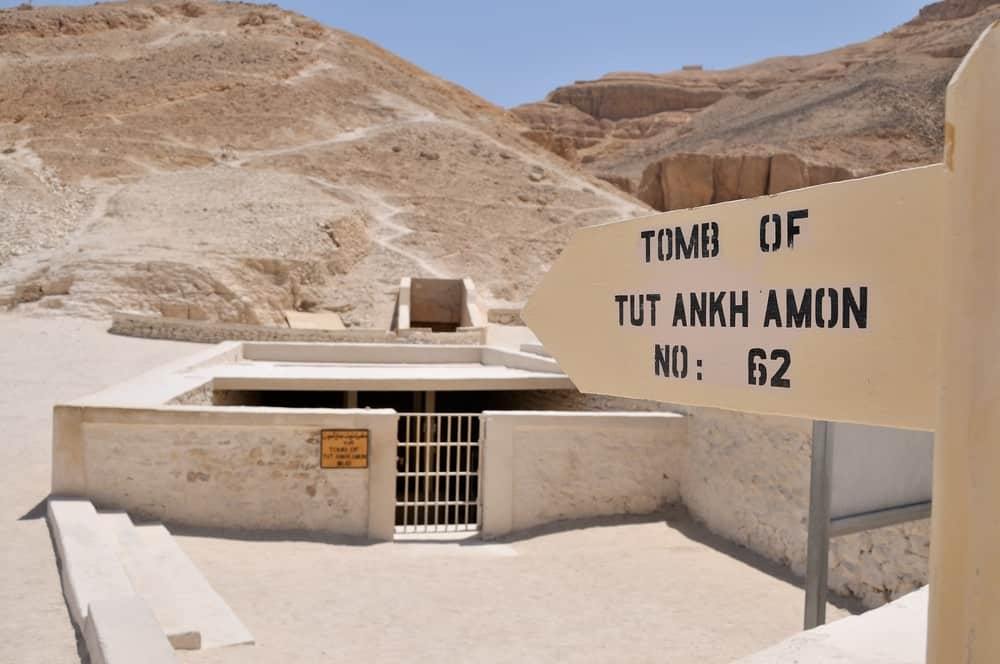
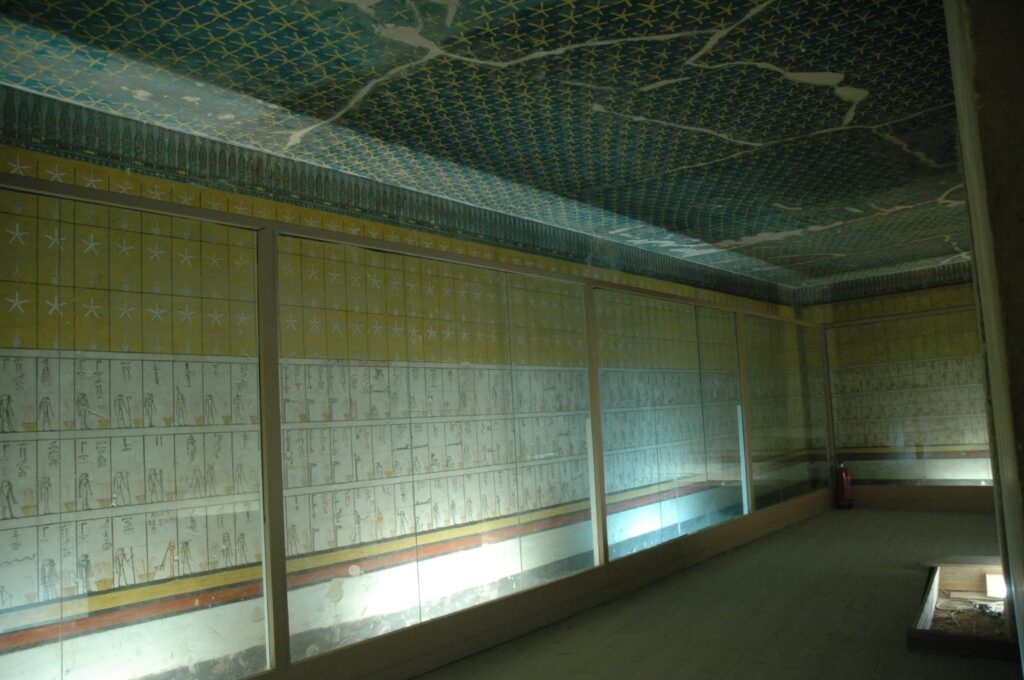
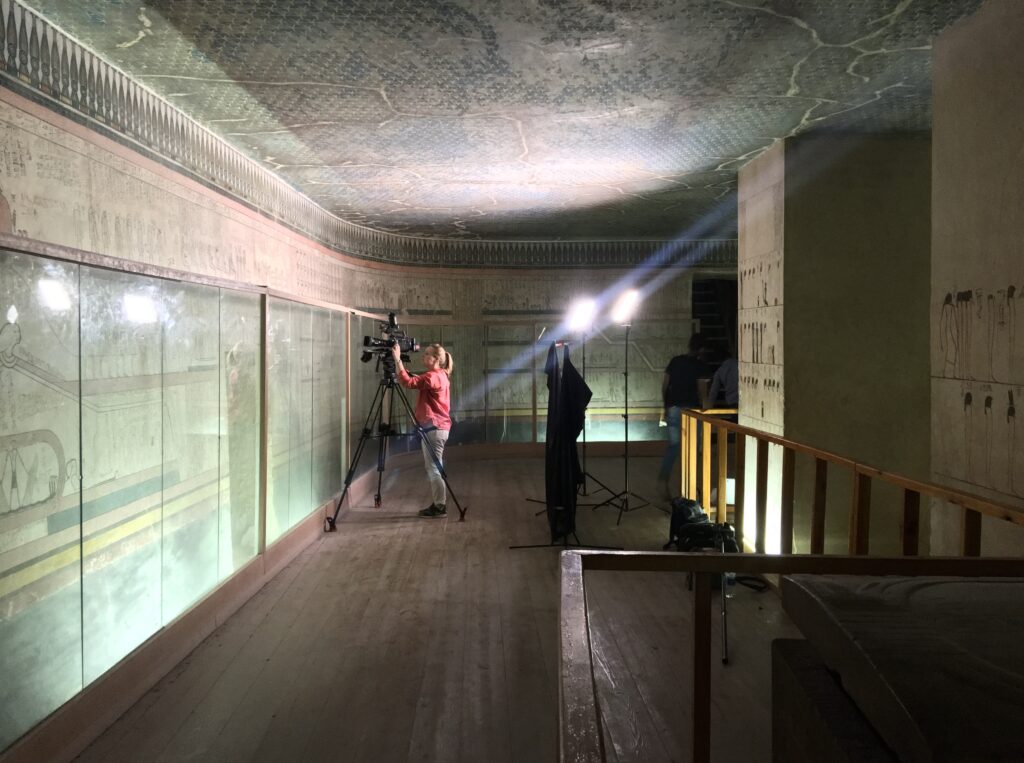
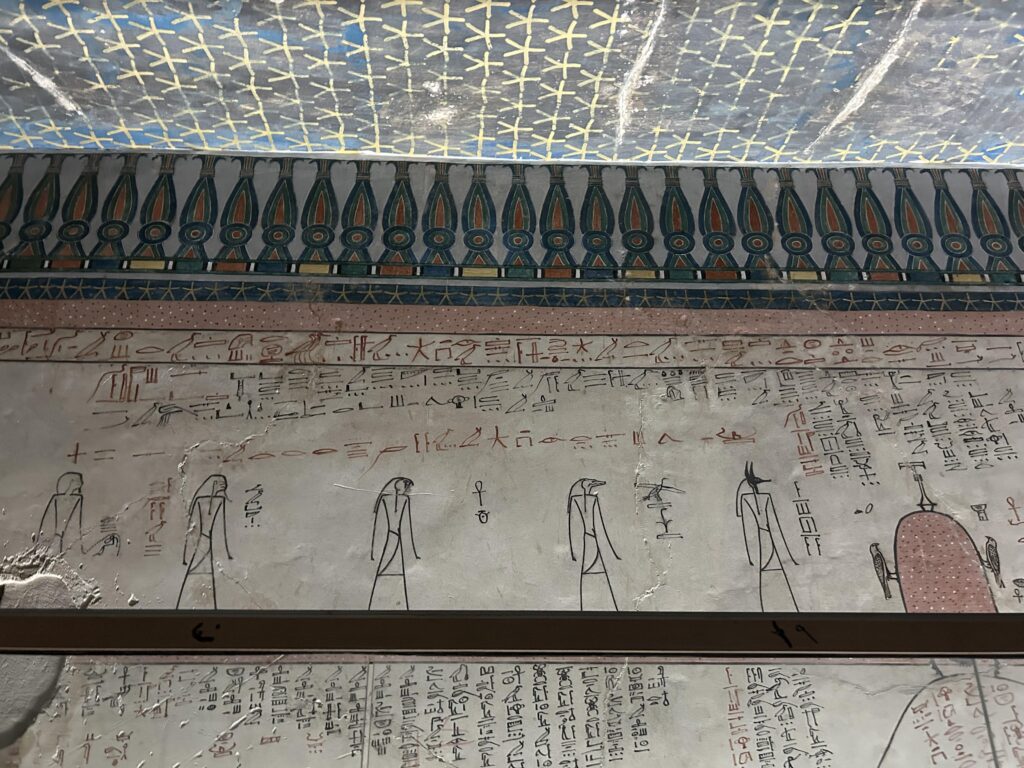
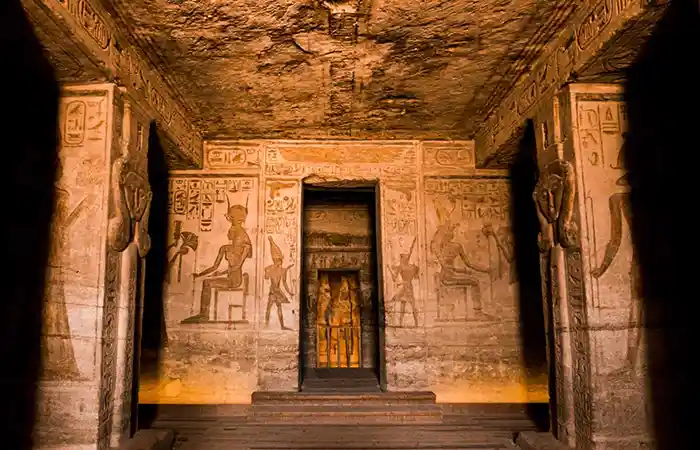
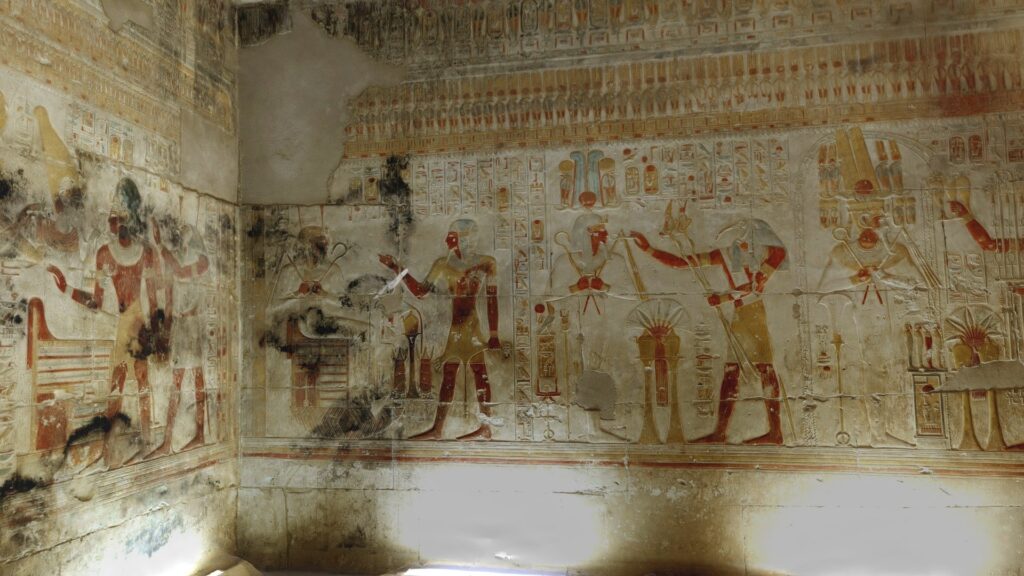
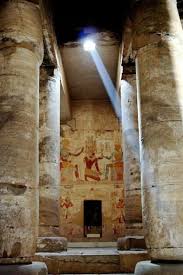
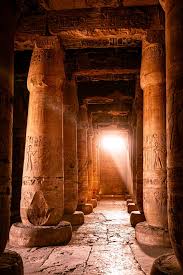
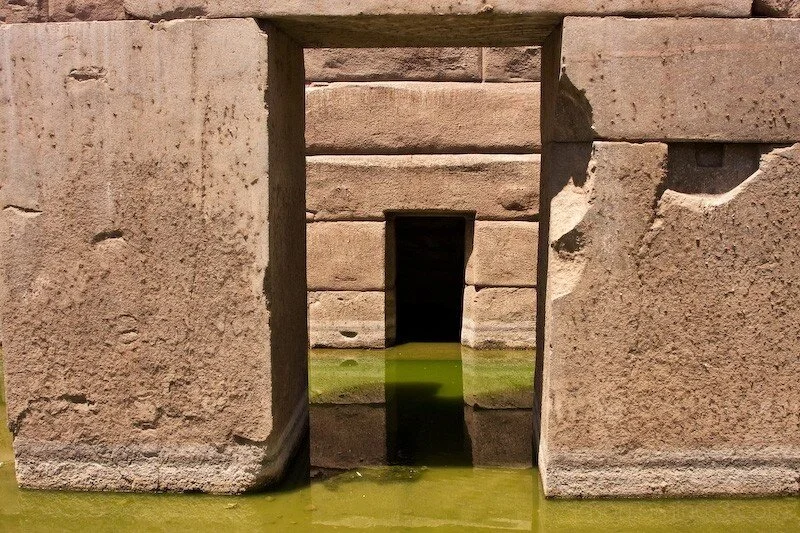
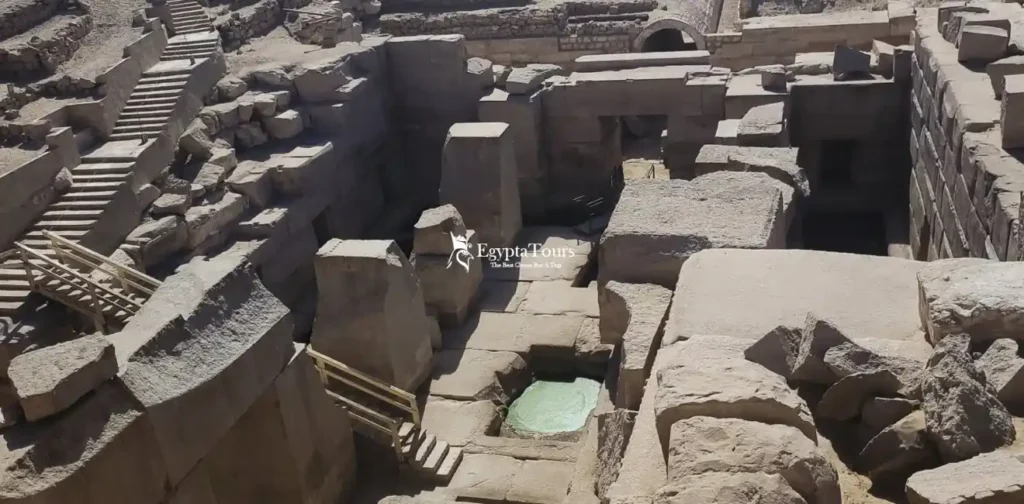
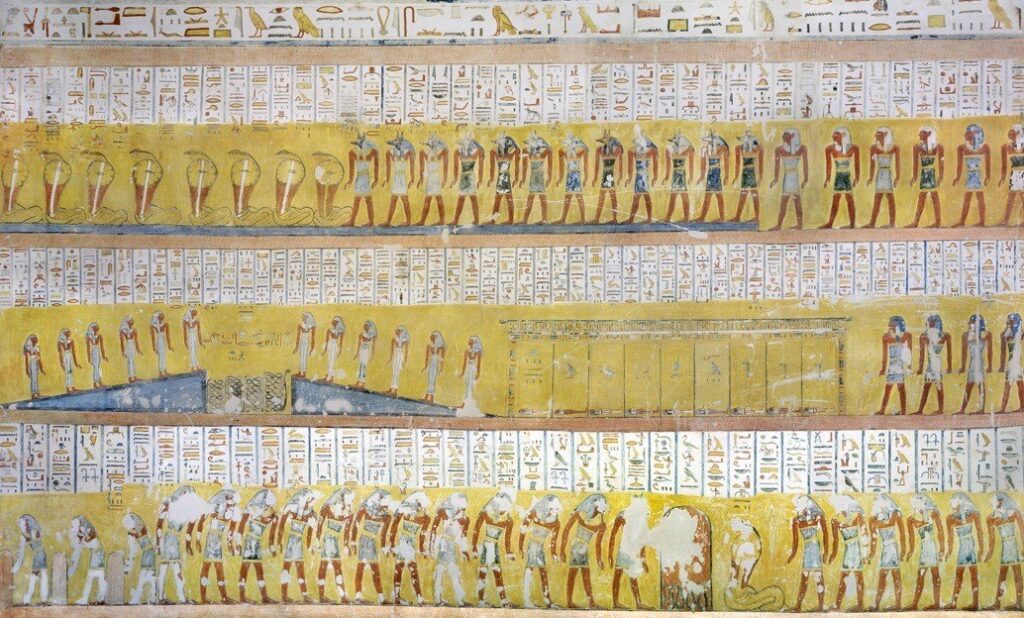
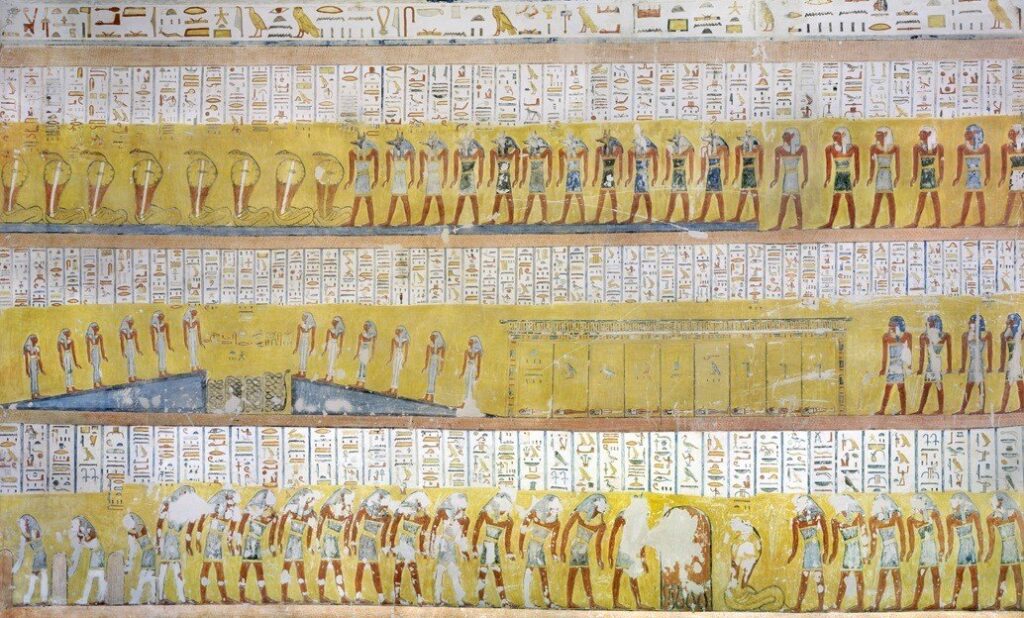
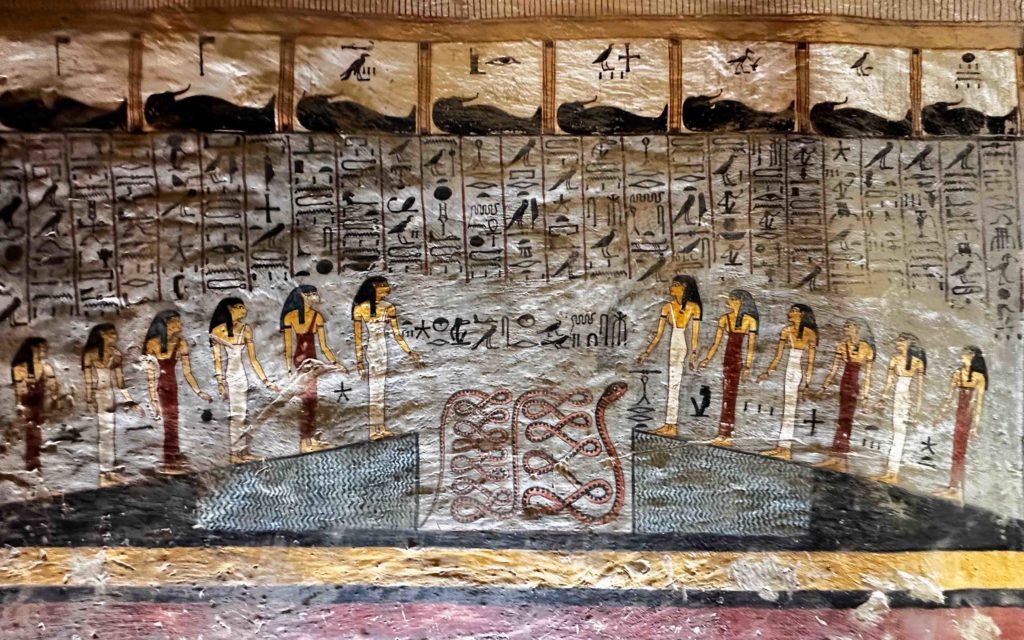
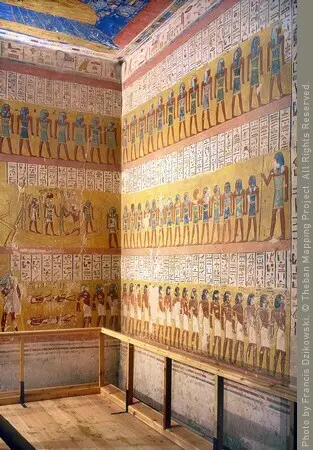
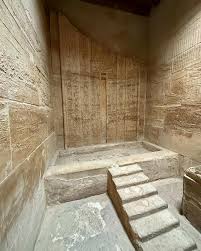
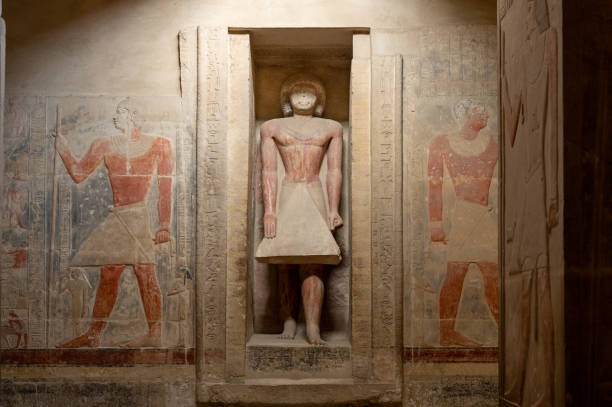
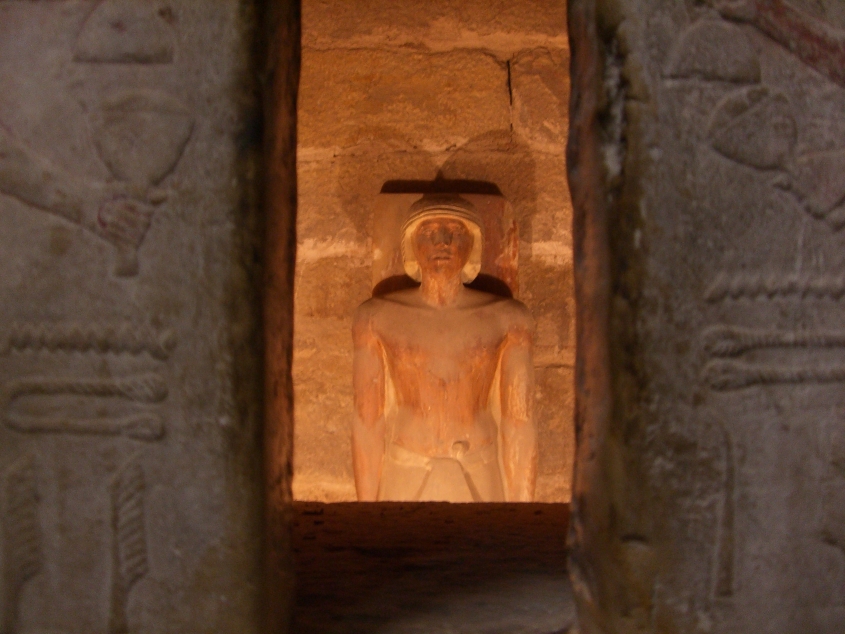
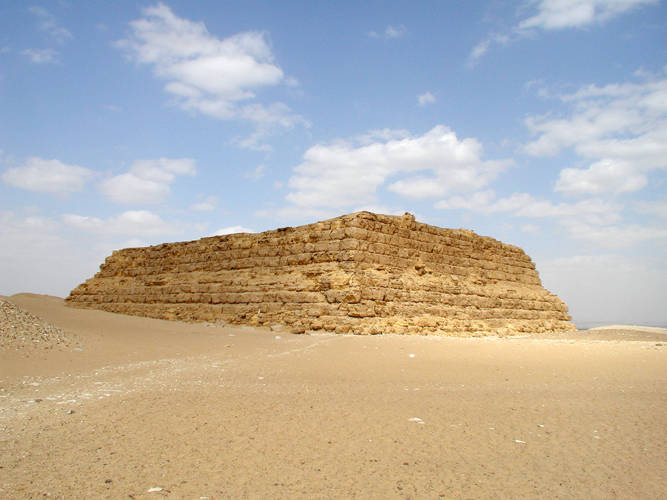
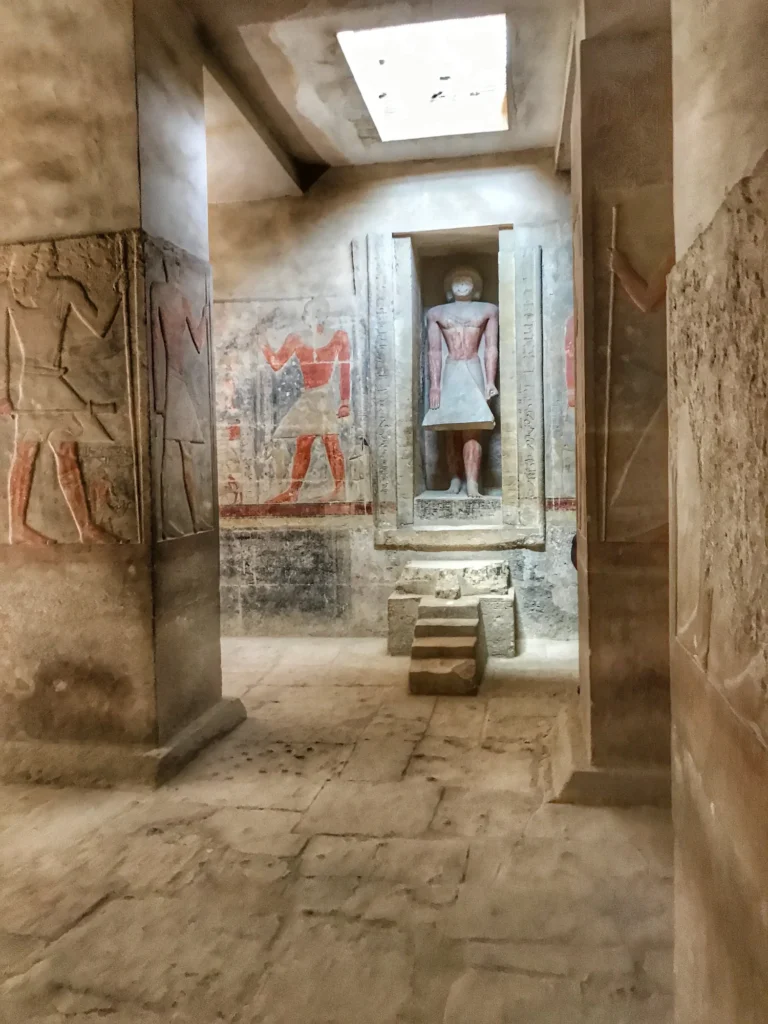
The entrance room to the tomb, with on the right part of the frame some of the steps leading up to the Earth’s surface.Nom du fichier :DSCN6589.JPG
Taille du fichier :417.1 Ko (427132 octets)
Date de la prise de vue :2002/11/01 15:00:32
Taille de la photo :1600 x 1200
Résolution :72 x 72 ppp
Nombre de bits :8 bits/canal
Attribut de protection :Désactivé
Attribut Masqué :Désactivé
ID de l’appareil :N/A
Nom du Modèle :E950
Mode de qualité :N/A
Mode de mesure :Multizones
Mode d’exposition :Programme auto
Flash :Non
Distance focale :7.2 mm
Vitesse d’obturation :1/4 seconde
Ouverture :F2.6
Correction d’exposition :0 IL
Balance des blancs fixe :N/A
Objectif :N/A
Mode synchro-flash :N/A
Différence d’exposition :N/A
Programme décalable :N/A
Sensibilité :N/A
Renforcement de la netteté :N/A
Mode de courbe :N/A
Mode couleur :COULEUR
Compensation des tons :N/A
Latitude (GPS) :N/A
Longitude (GPS) :N/A
Altitude (GPS) :N/A
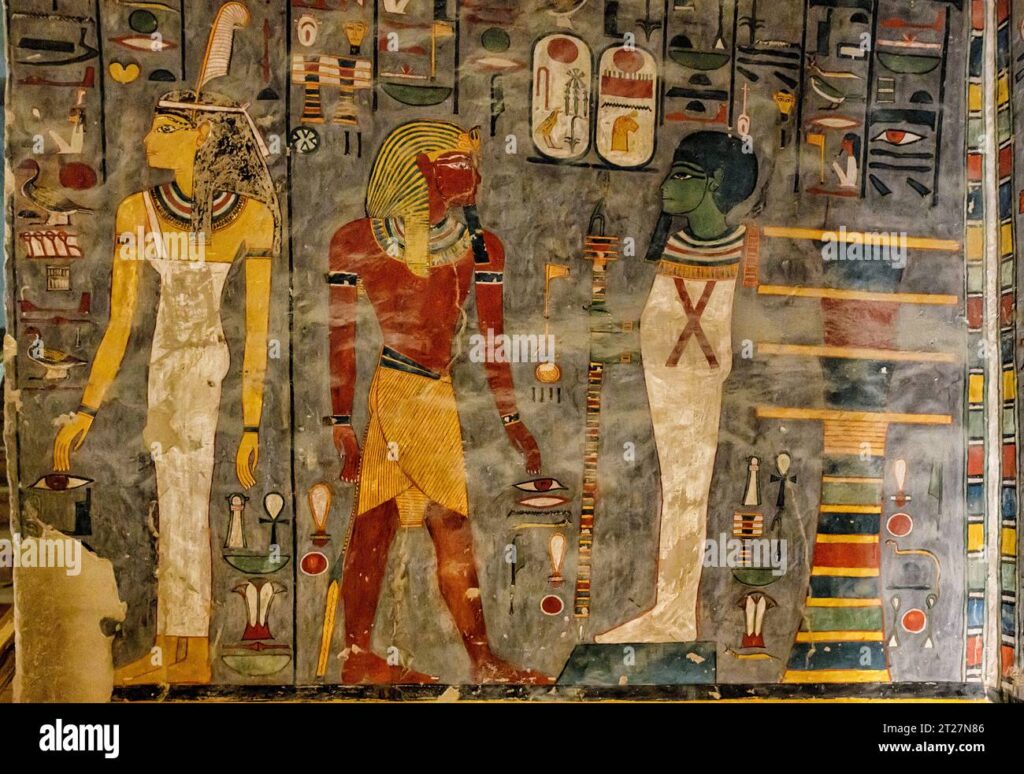
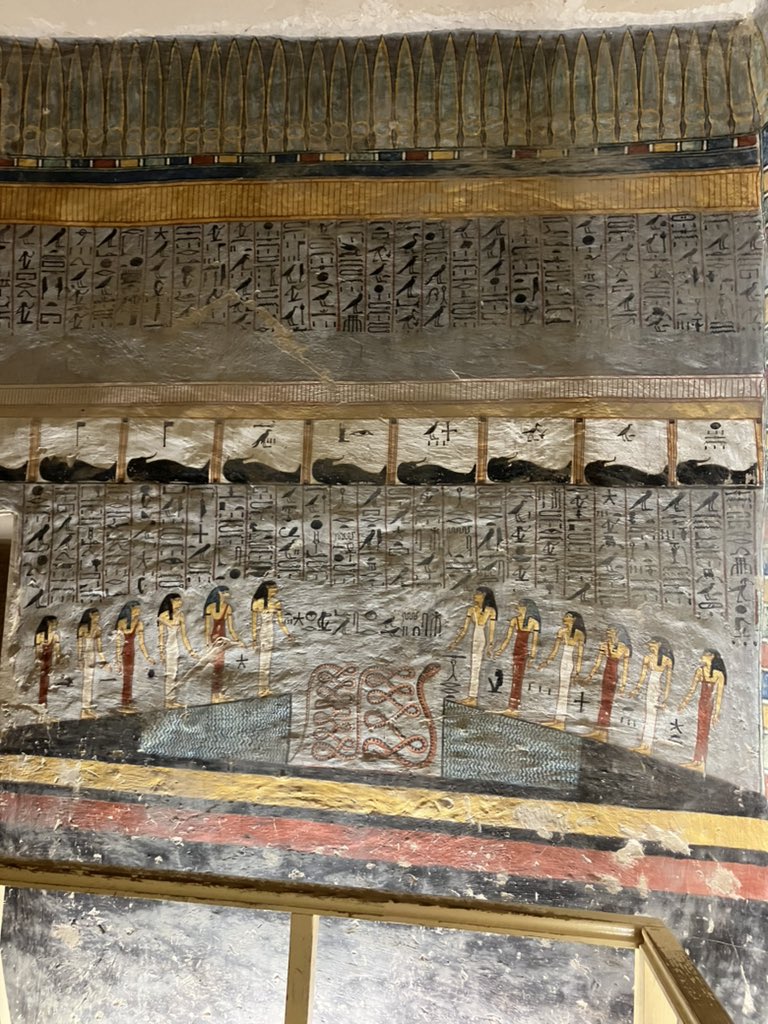
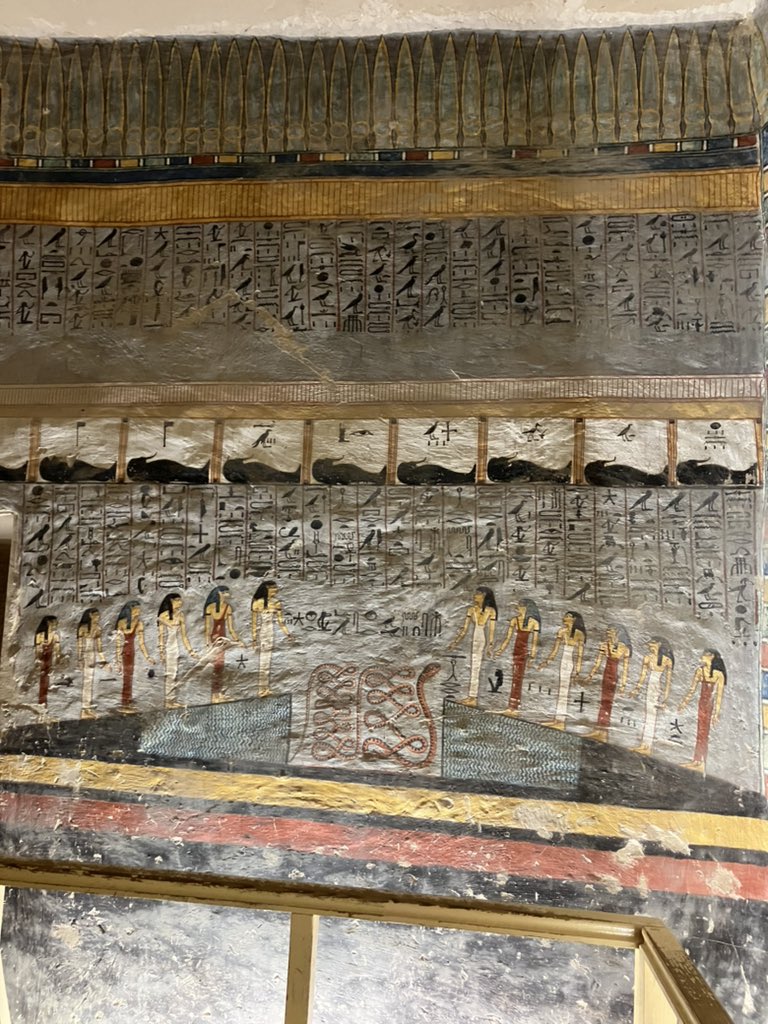
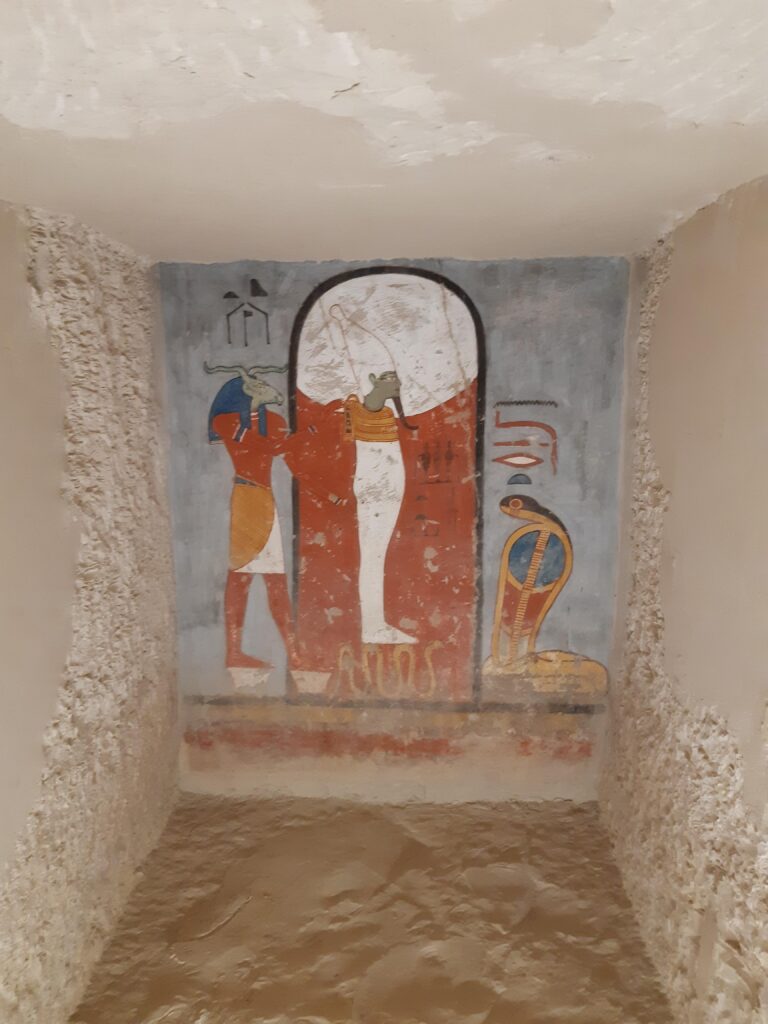
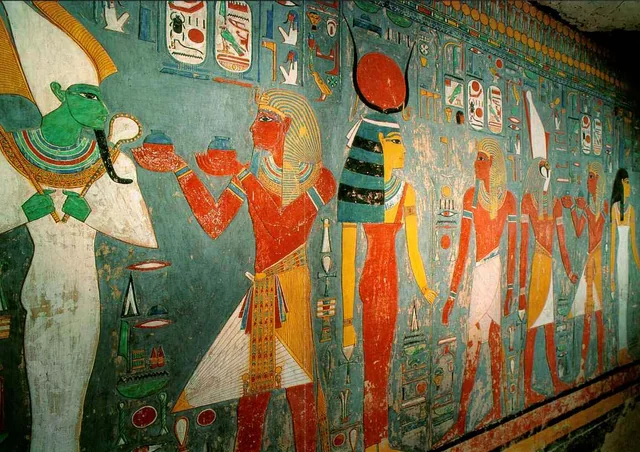
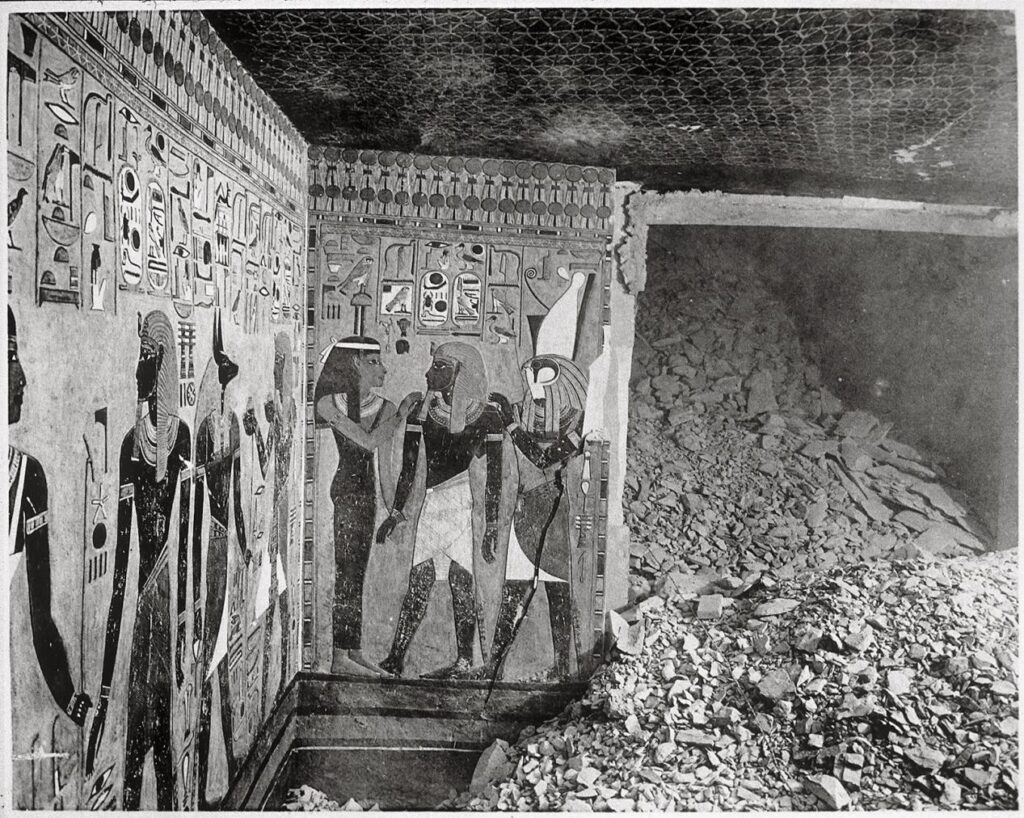
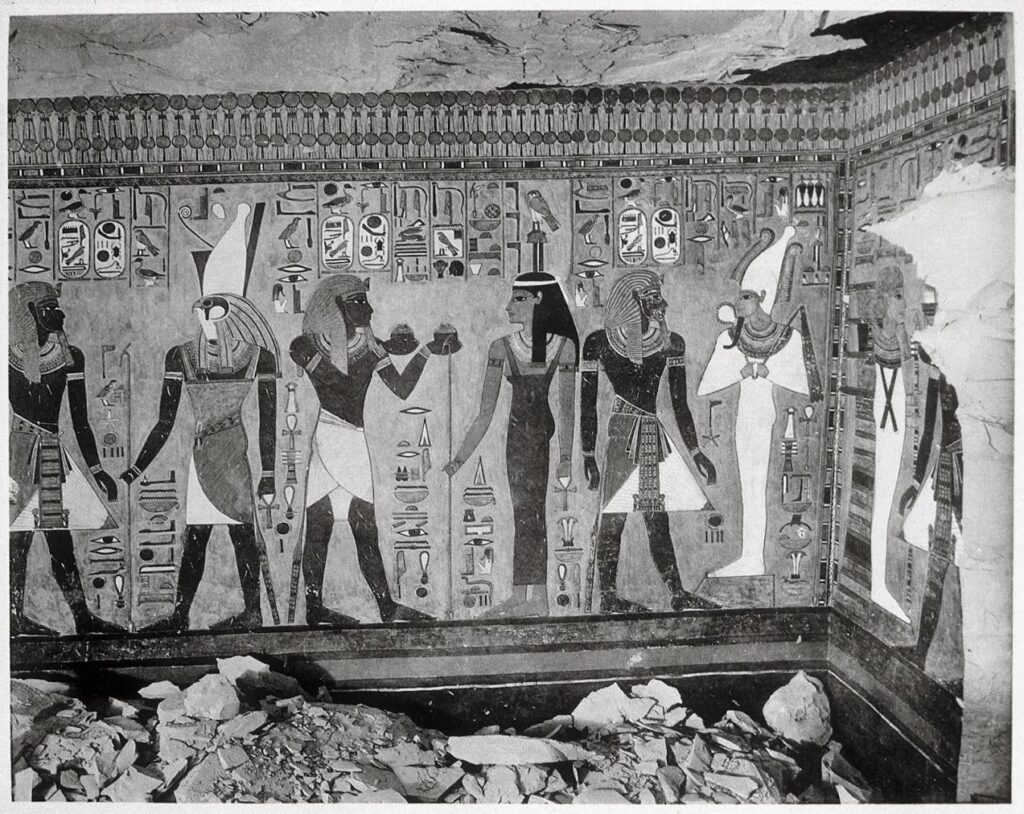
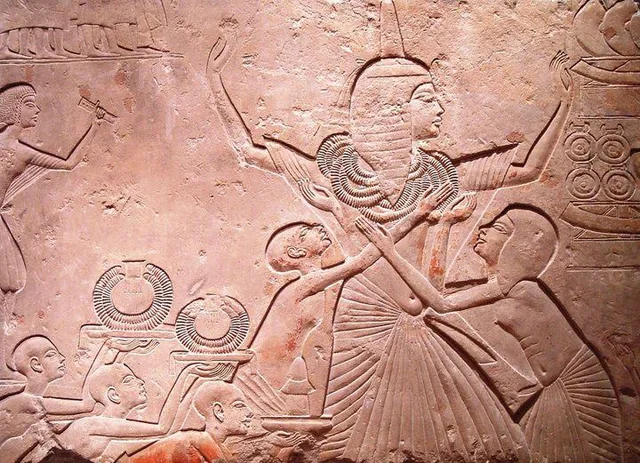
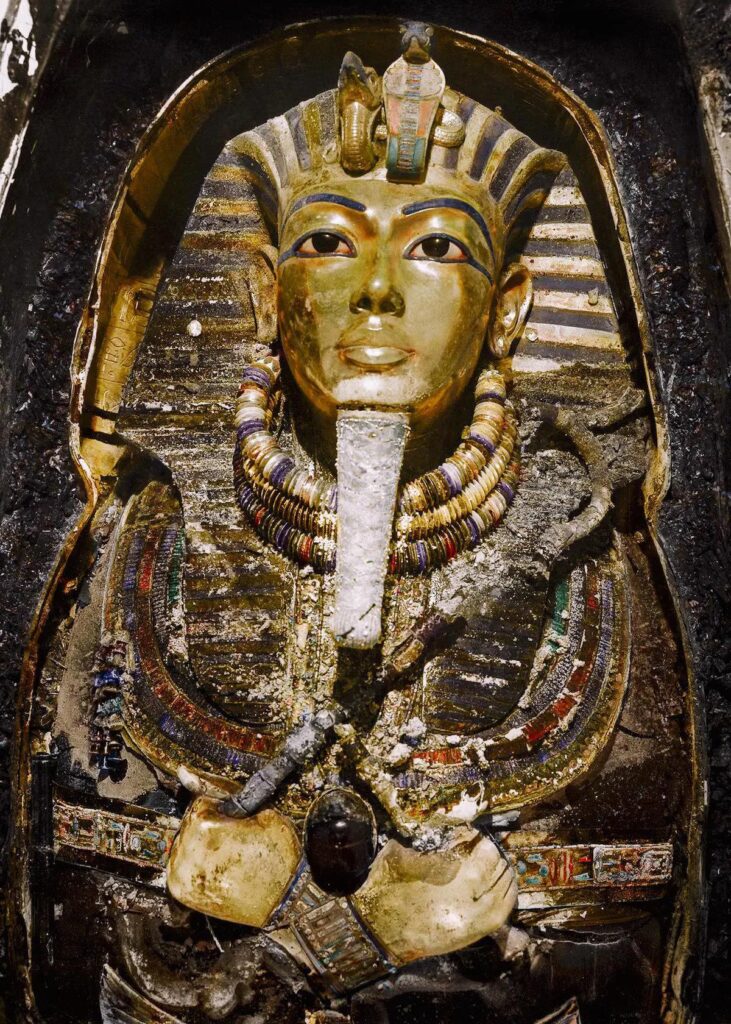
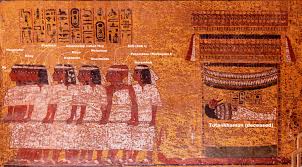
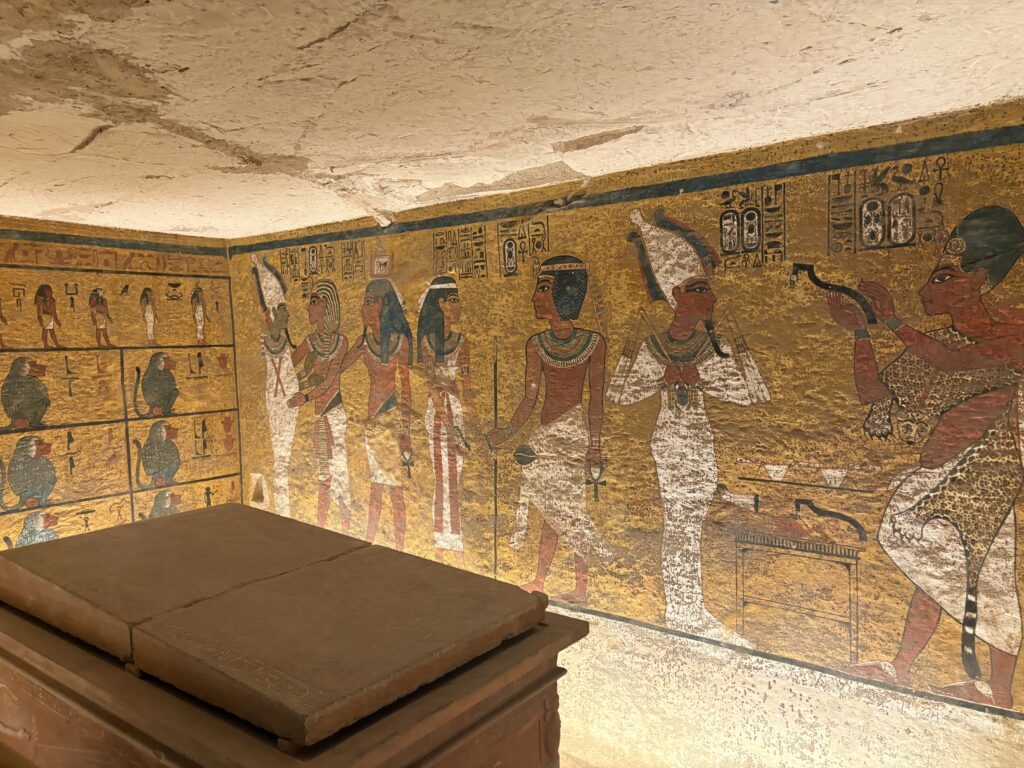
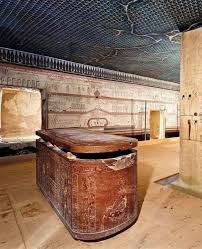
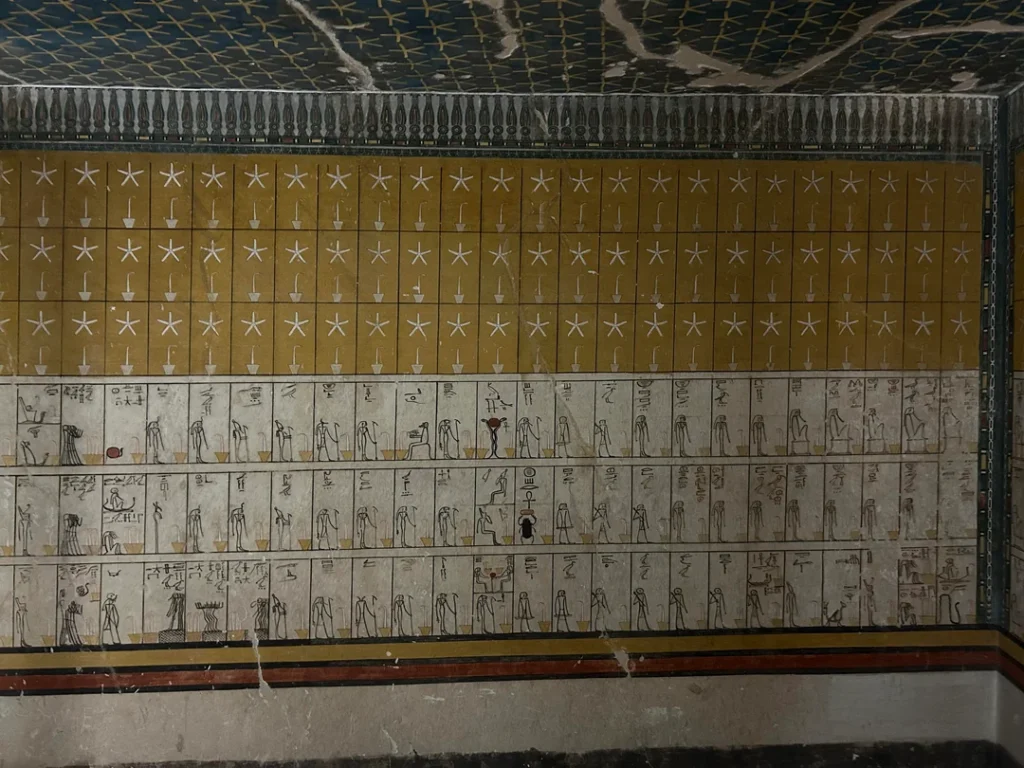
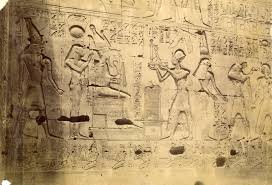
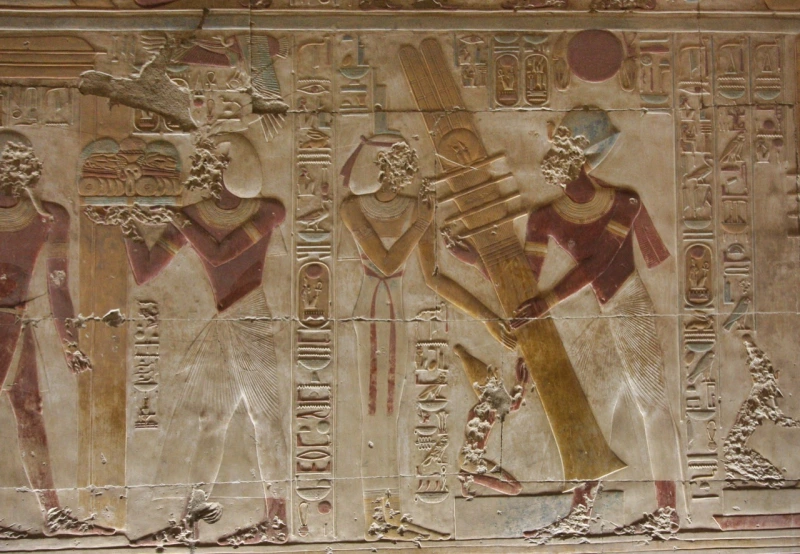
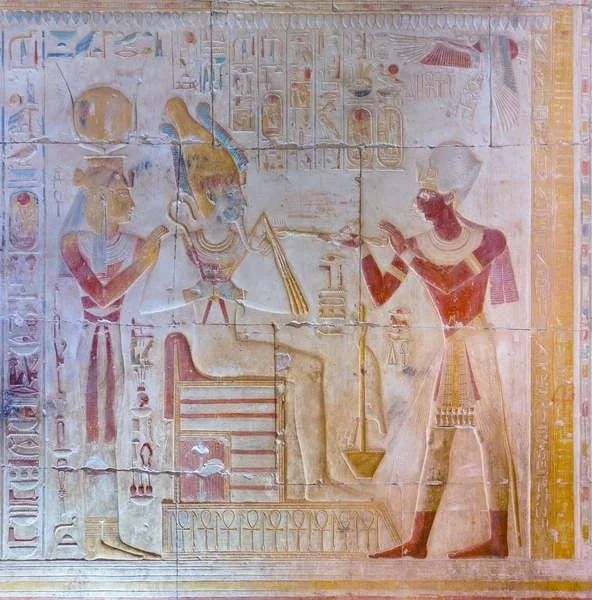
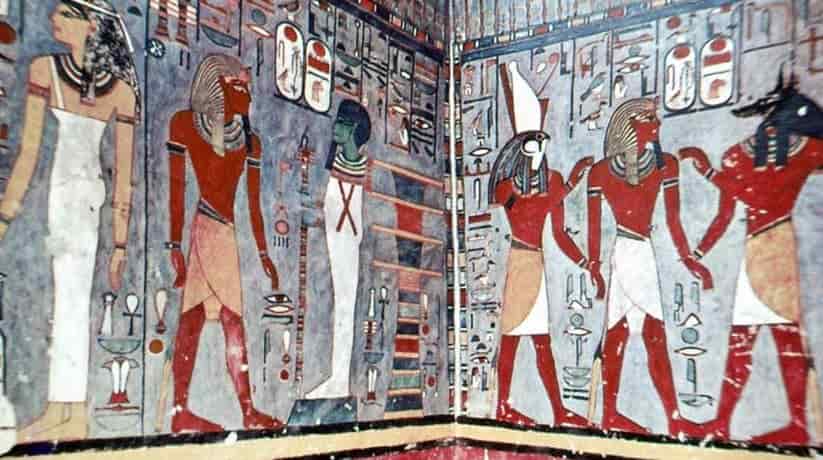
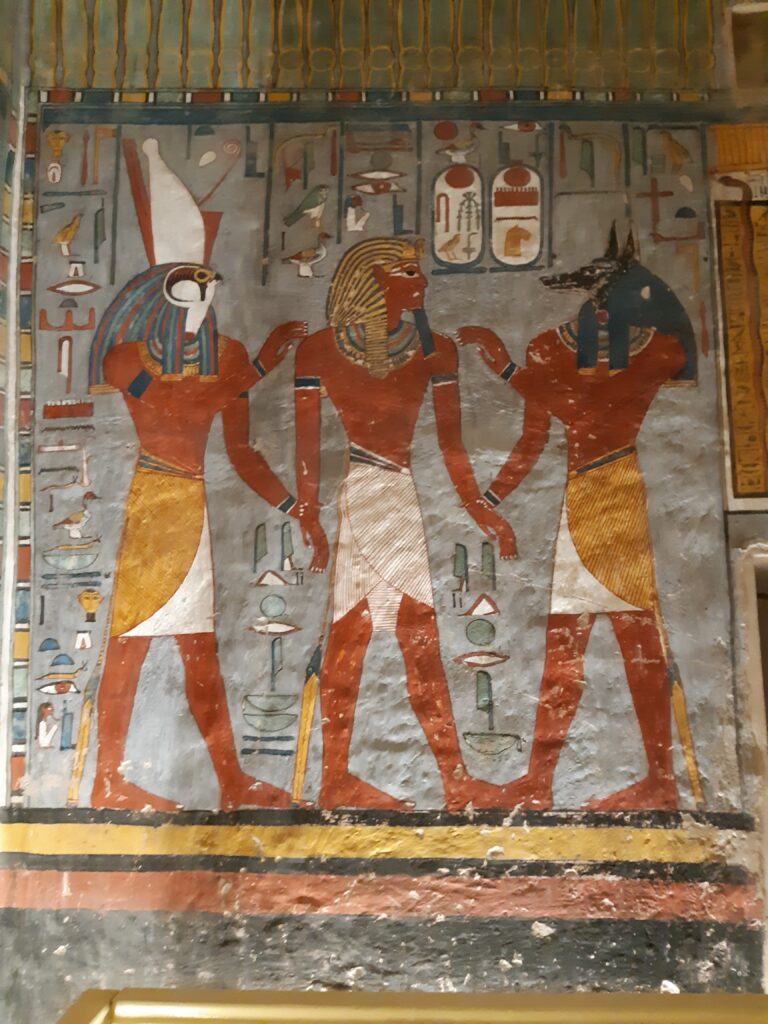
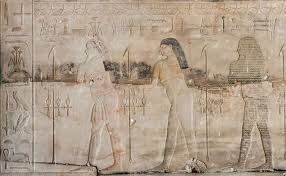
The north wall of the burial chamber depicts three separate scenes, ordered from right to left. In the first, Ay, Tutankhamen’s successor, performs the “opening of the mouth” ceremony on Tutankhamen, who is depicted as Osiris, lord of the underworld. In the middle scene, Tutankhamen, dressed in the costume of the living king, is welcomed into the realm of the gods by the goddess Nut. On the left, Tutankhamen, followed by his ka (spirit twin), is embraced by Osiris.
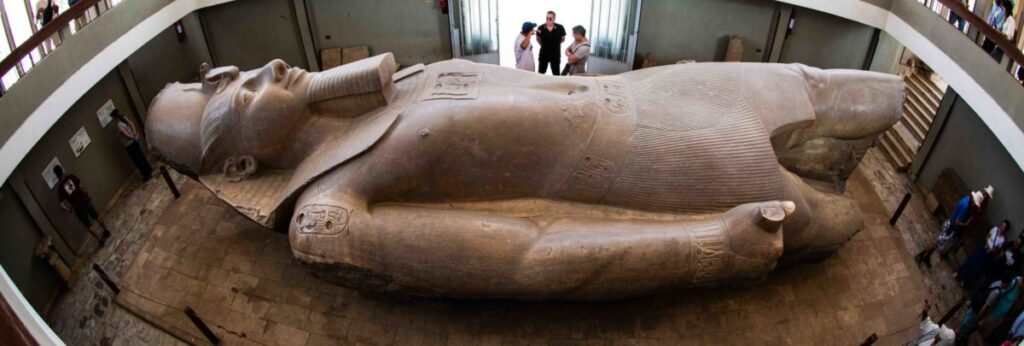
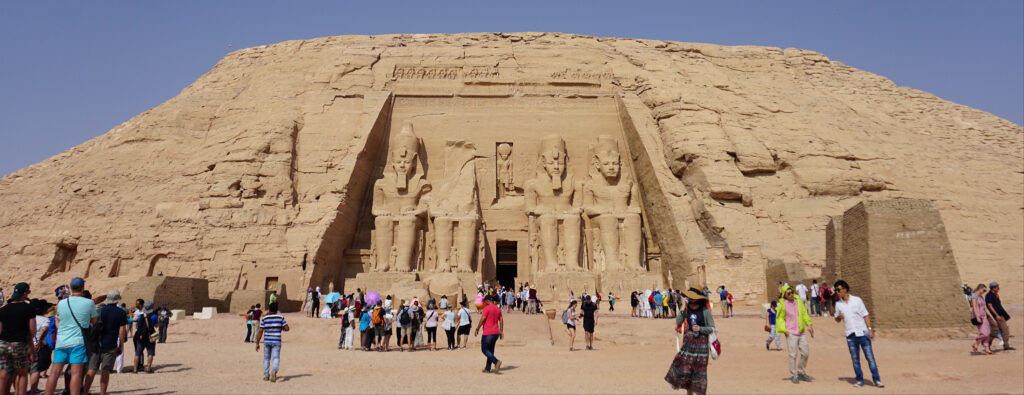
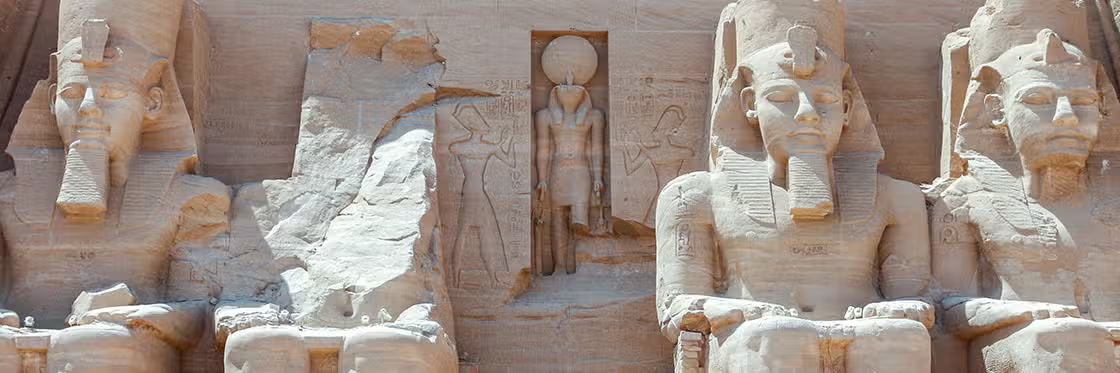
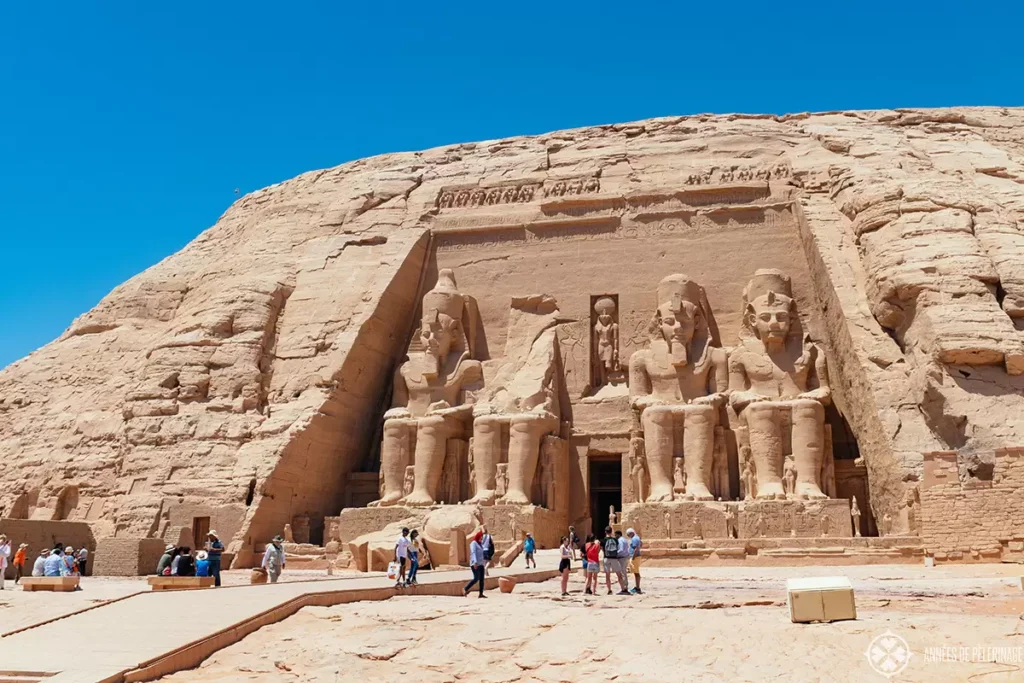
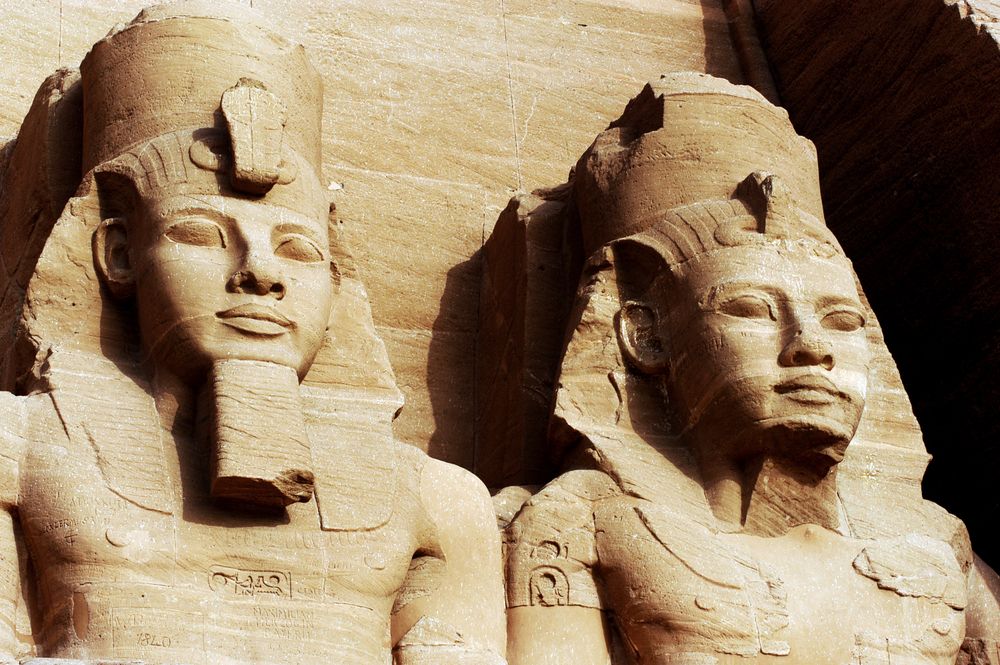
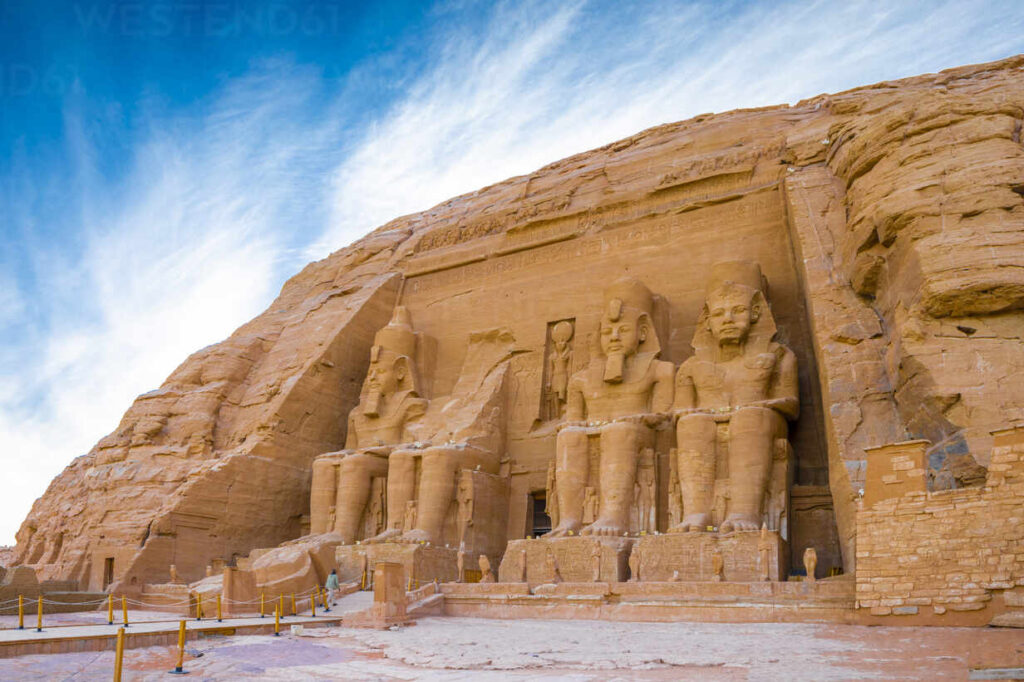
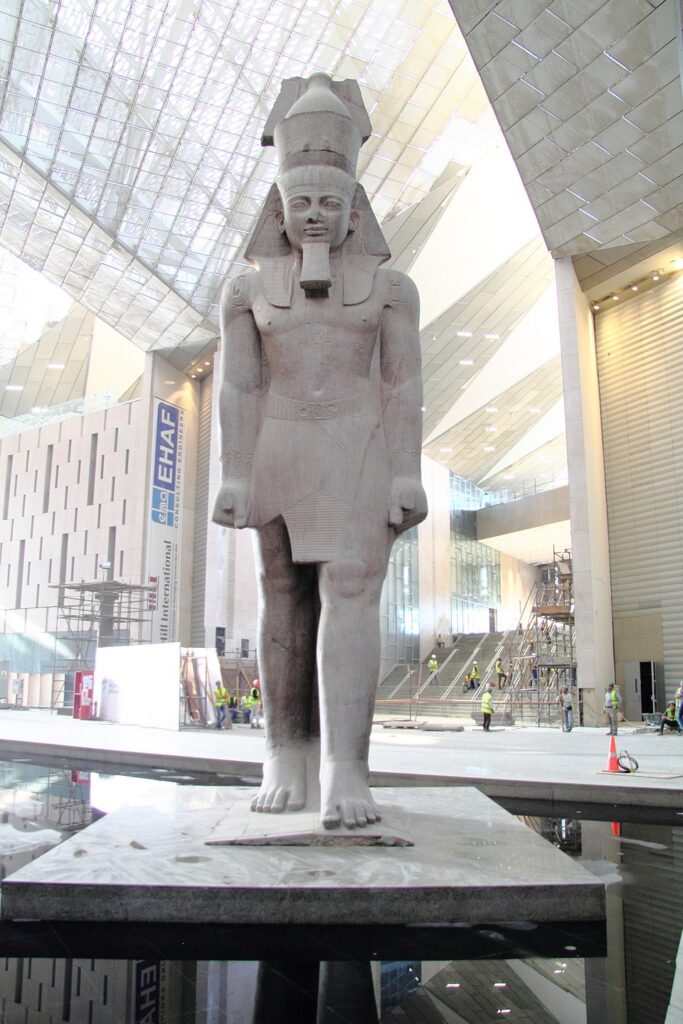
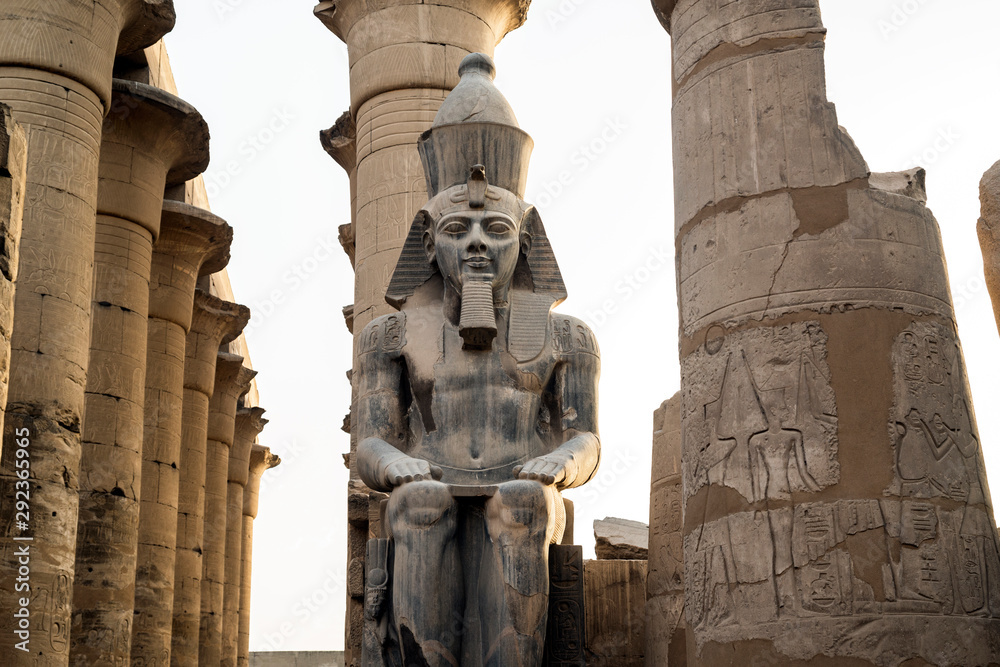
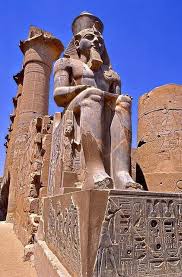
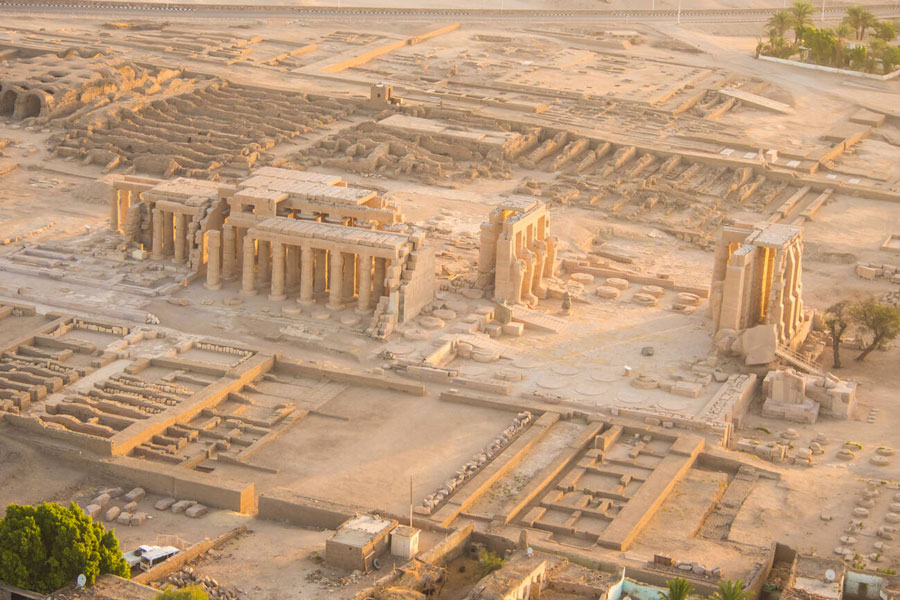
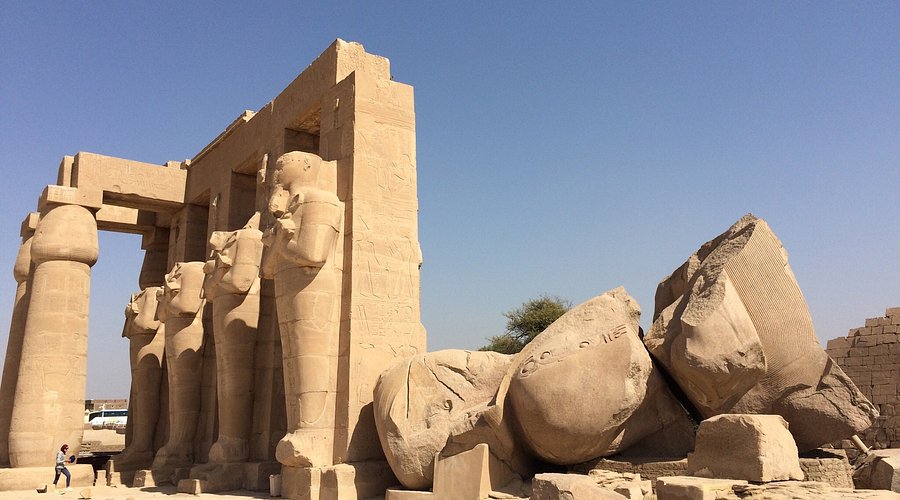
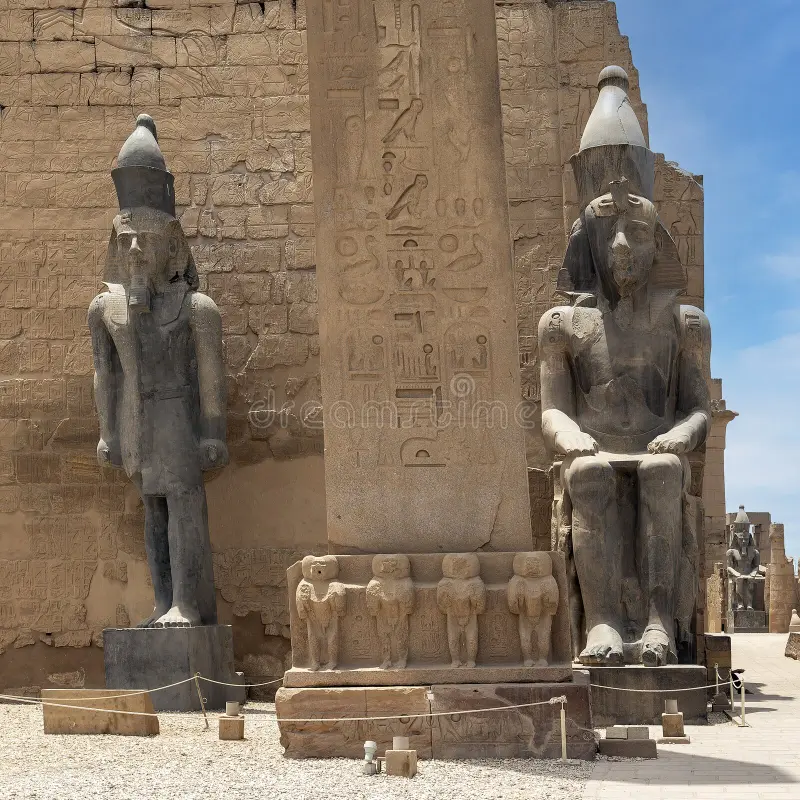
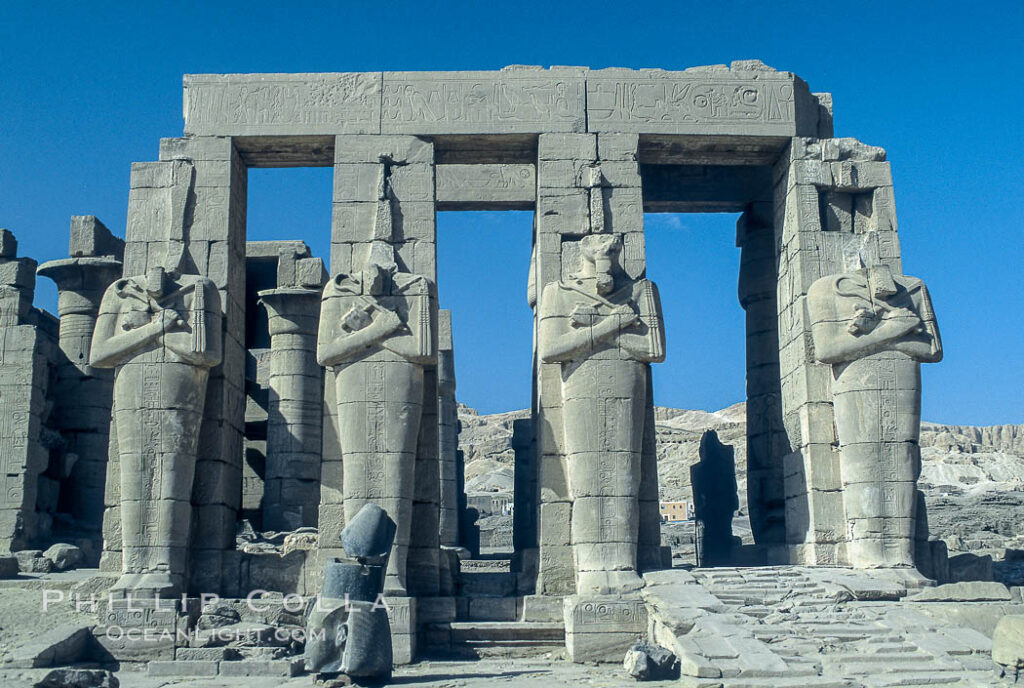
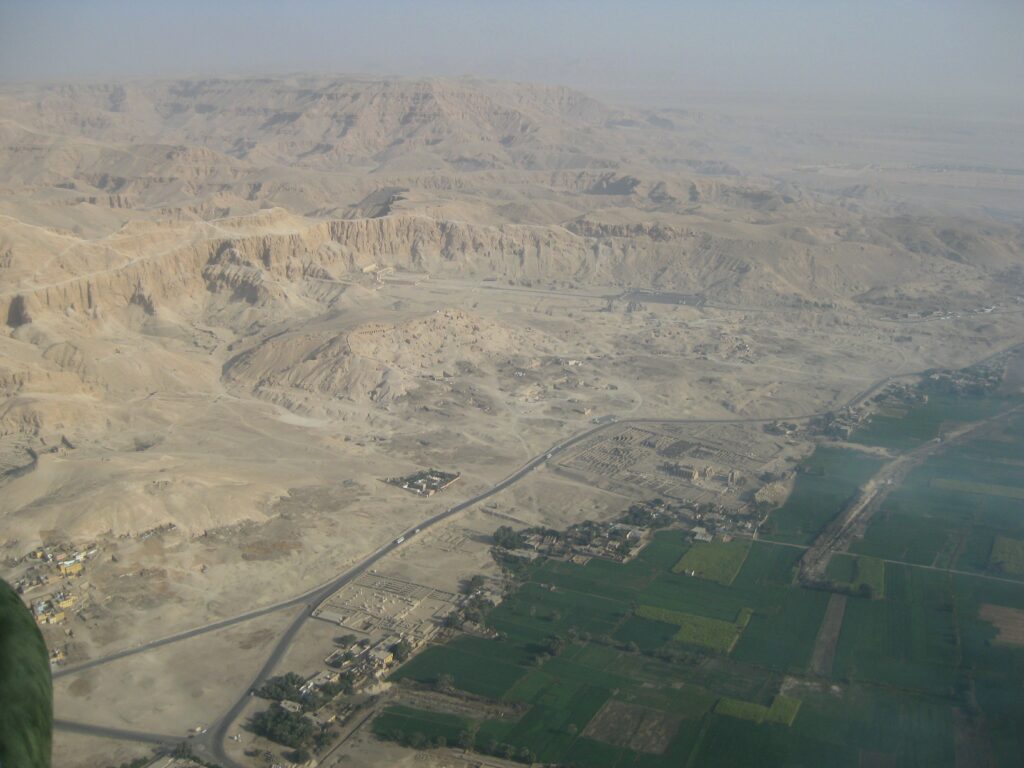
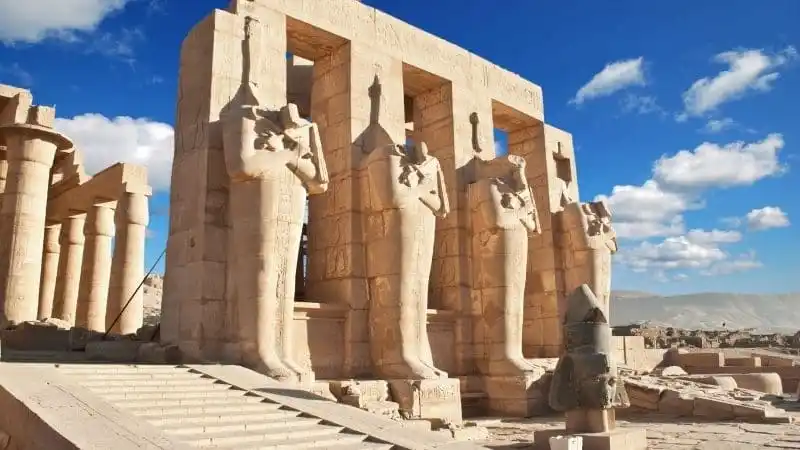
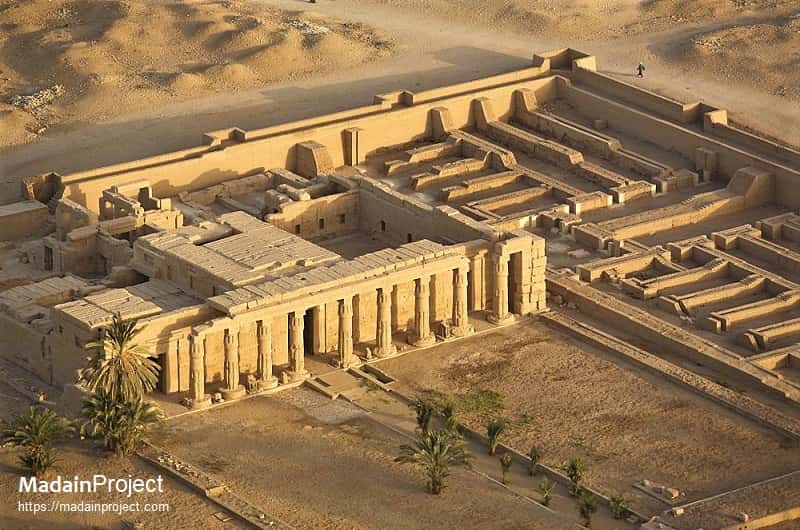
www.thomaskotlorz.deThe Great Temple of Ramesses ll, Abu Simbel, UNESCO World Heritage Site, Egypt, North Africa, AfricaThe Ramesseum Temple – Egypt Tours Portal????????????????????????????????????????????????????????????The image was captured close to noon on august 21st 2023, on the East Bank in Luxor, Egypt, on a hot and cloudless day, while visiting the Luxor Temple Complex. The image shows a seated statue of Ramesses II, in front of the First Pylon, marking the entrance to the historic complex, which is one of the UNESCO World Heritage sites of Luxor. The picture was made on a visit to the complex while traveling on a Nile cruise.Egypt. Aerial view over the West Bank of Luxor – ruins of the Ramesseum (mortuary temple of Pharaoh Ramesses II)Mortuary Temple of Ramesses II – Egypt Tours PortalElisofon, EliotRamesseum – Egypt Tours PortalRamesseum.The Ramesseum Temple – Egypt Tours PortalSeated statue of Ramesses II by the Luxor Temple entrance, Egypt.
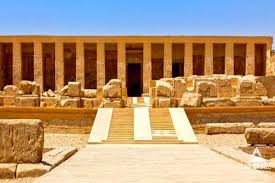
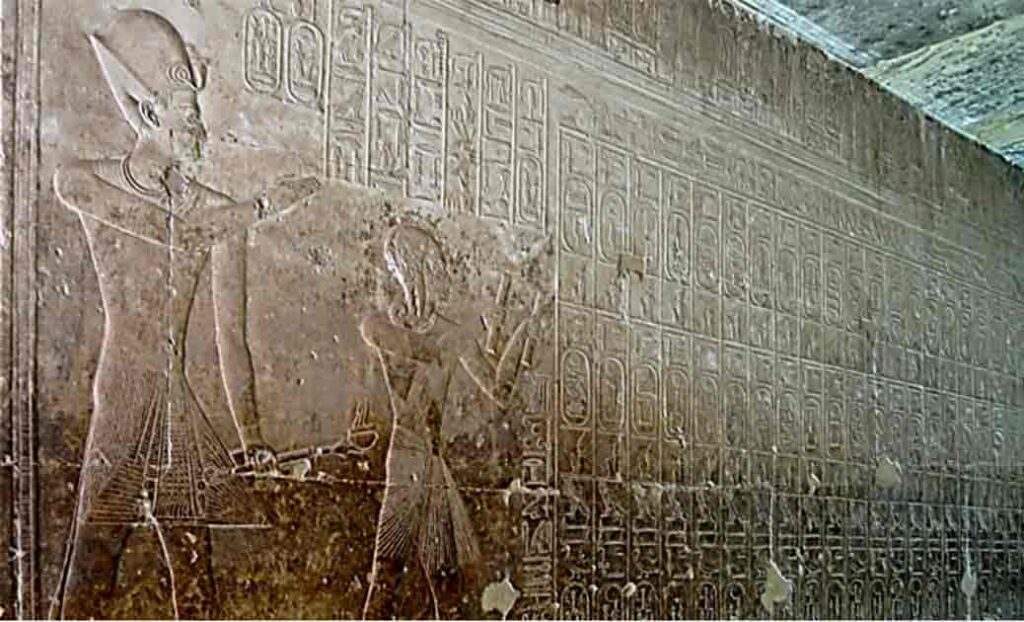
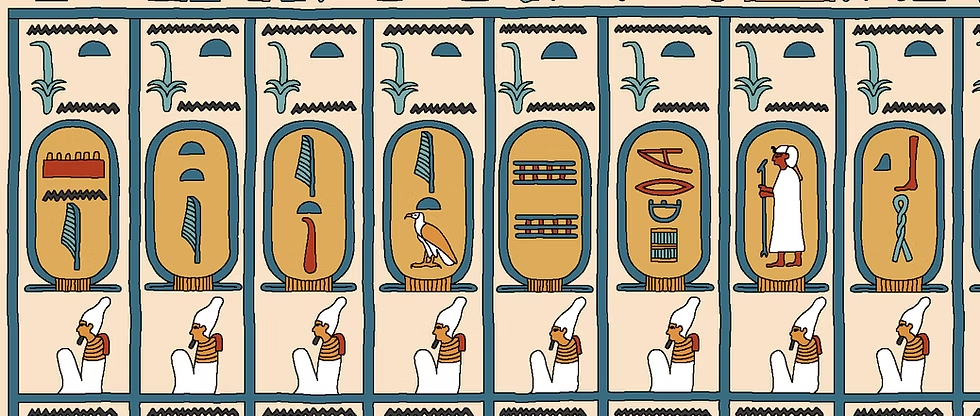
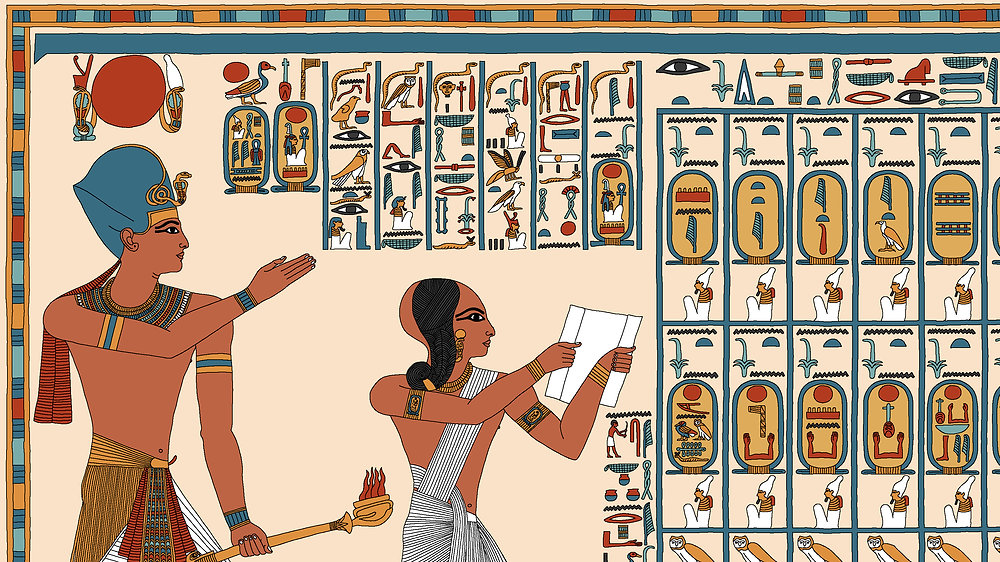
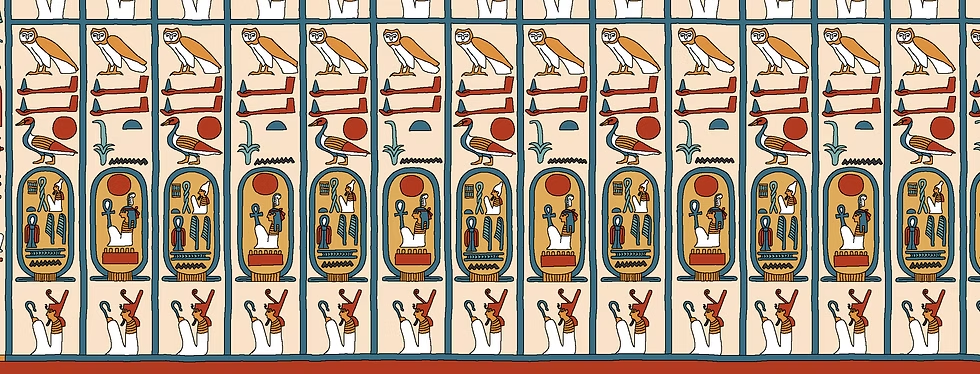
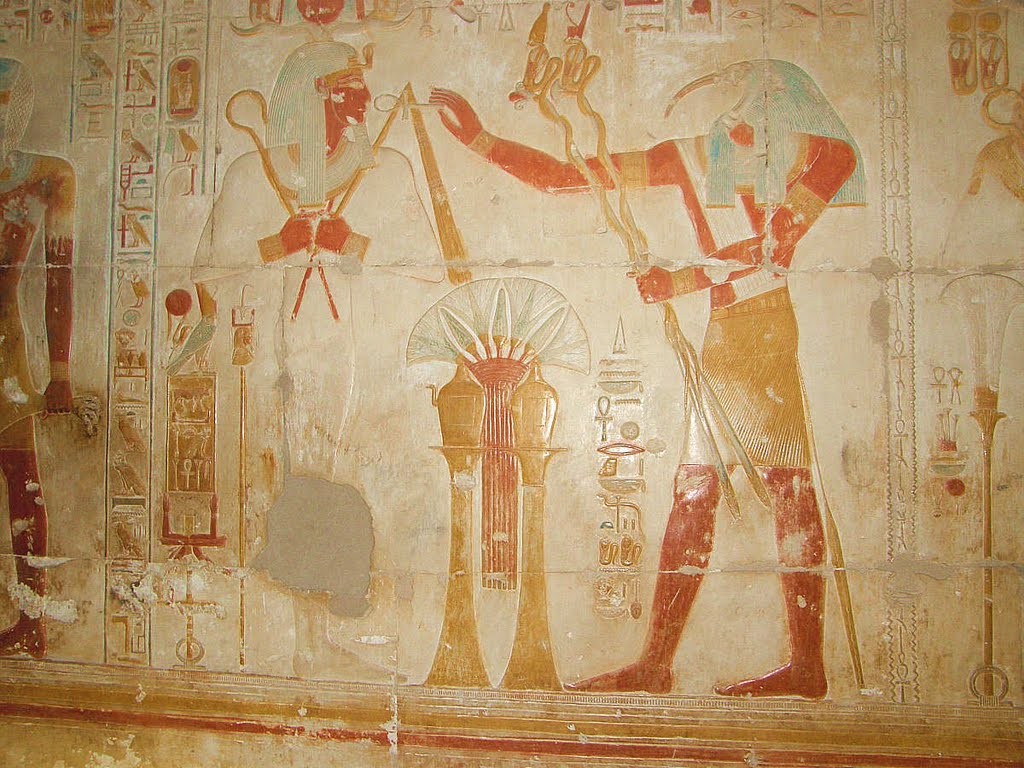
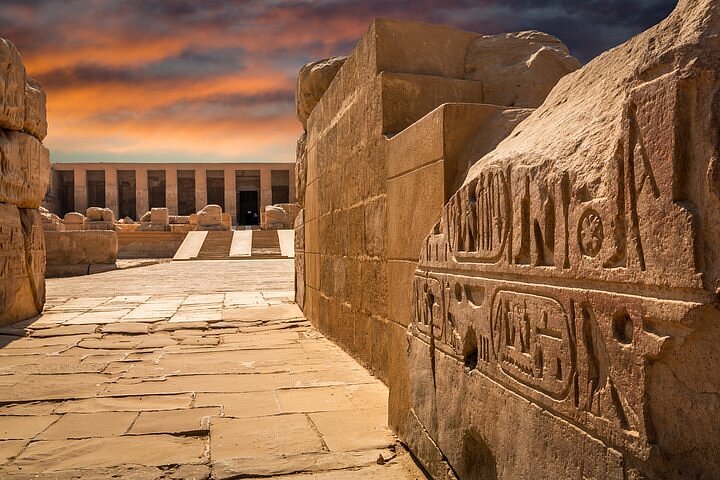
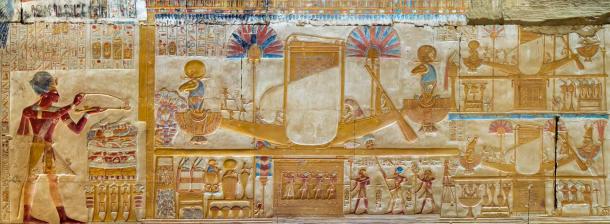
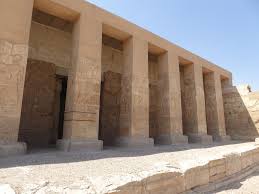
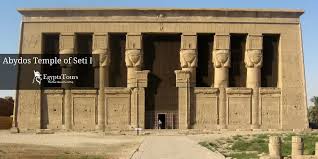
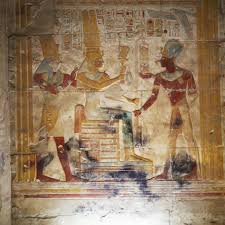
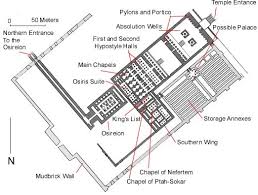
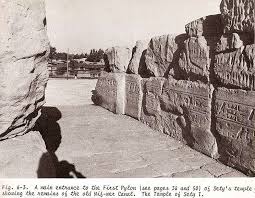
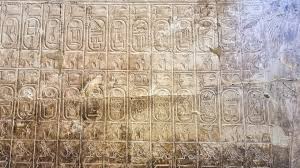
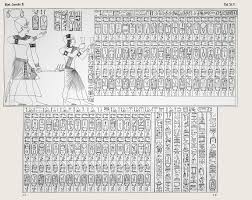
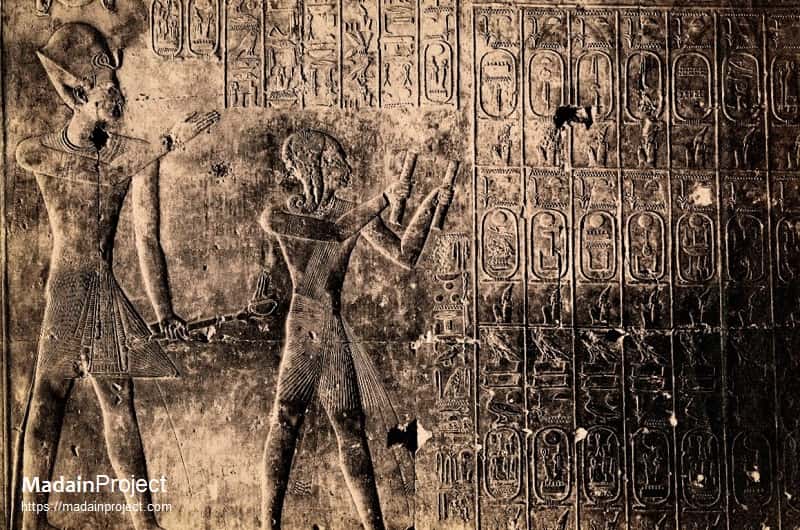
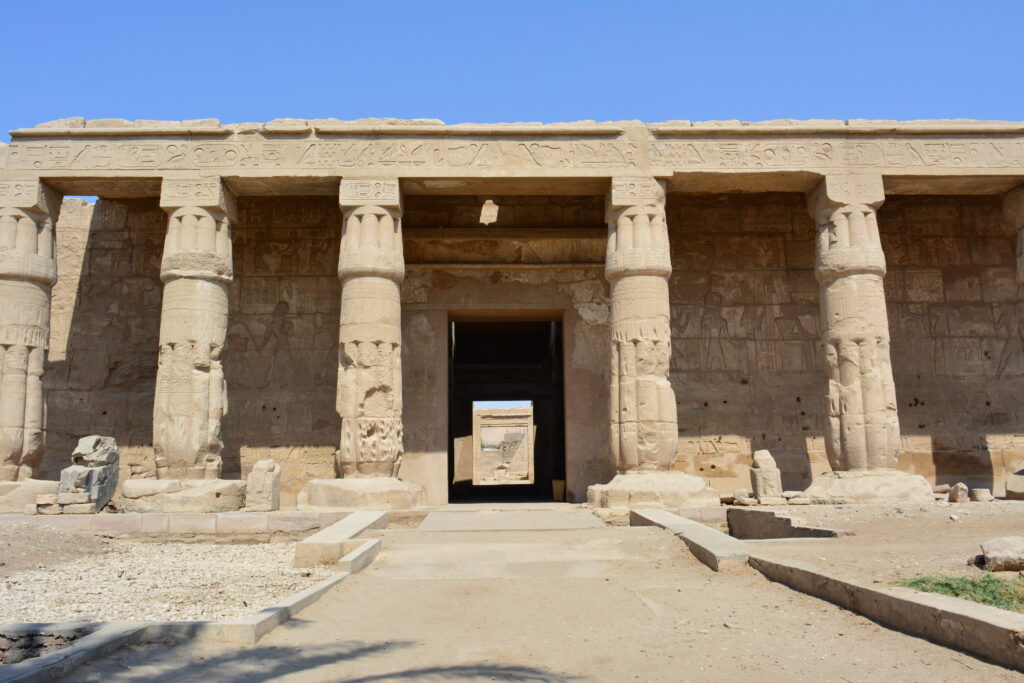
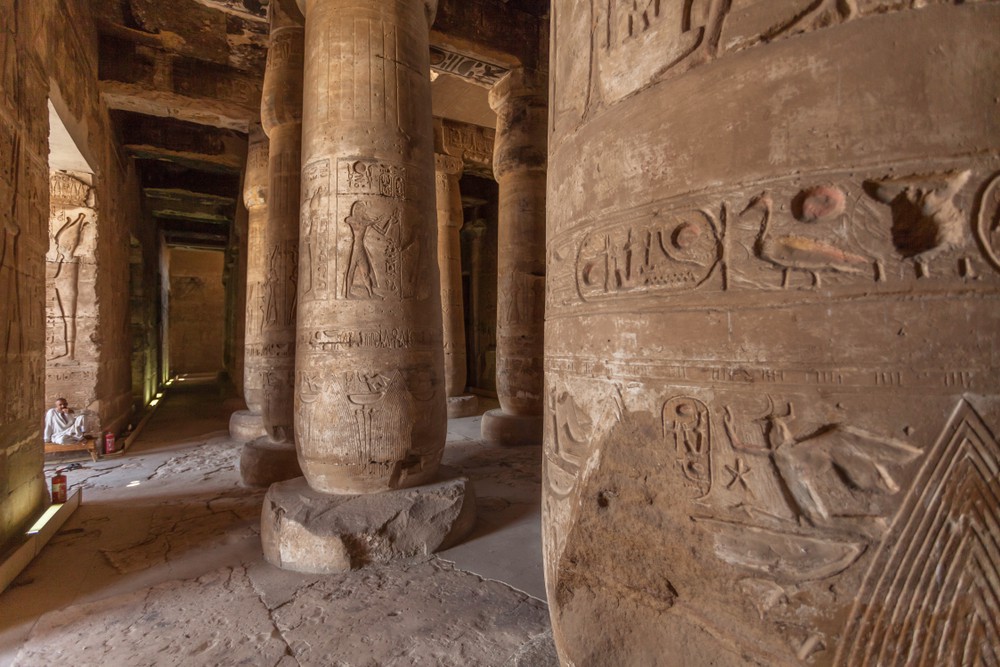
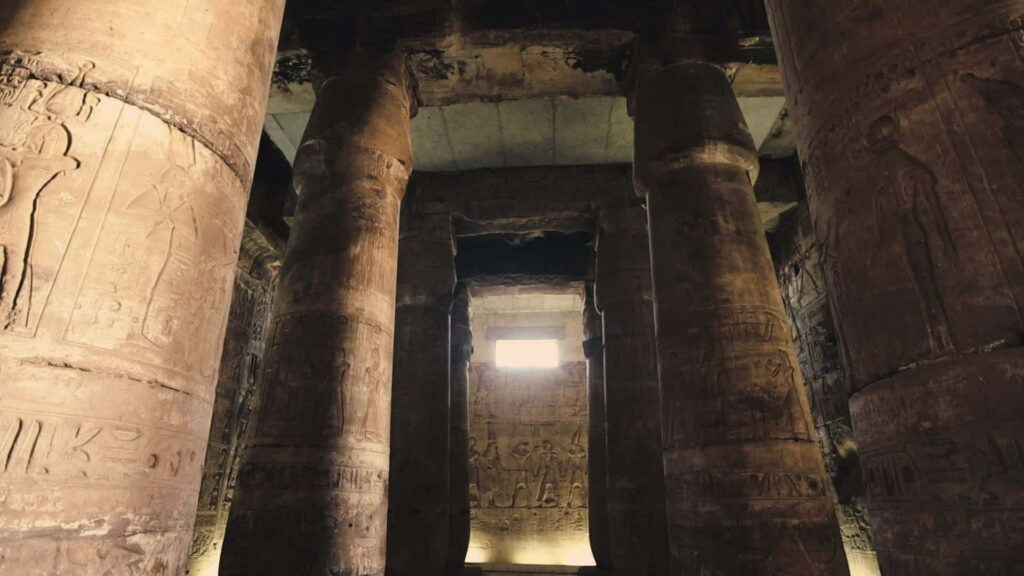
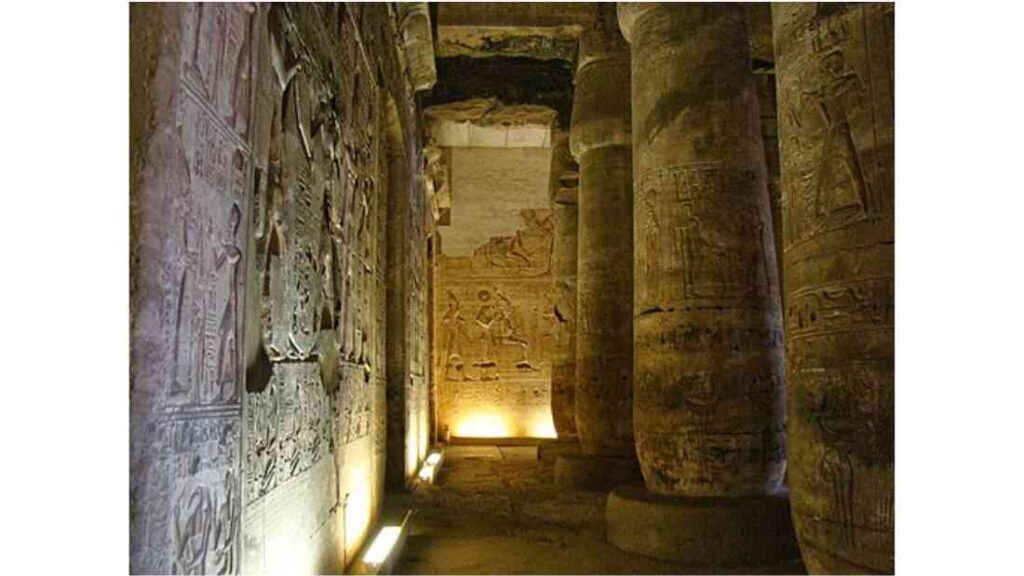
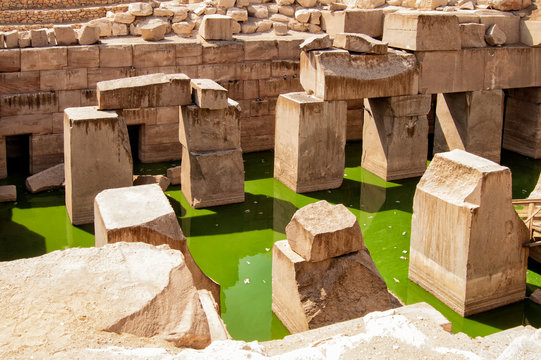
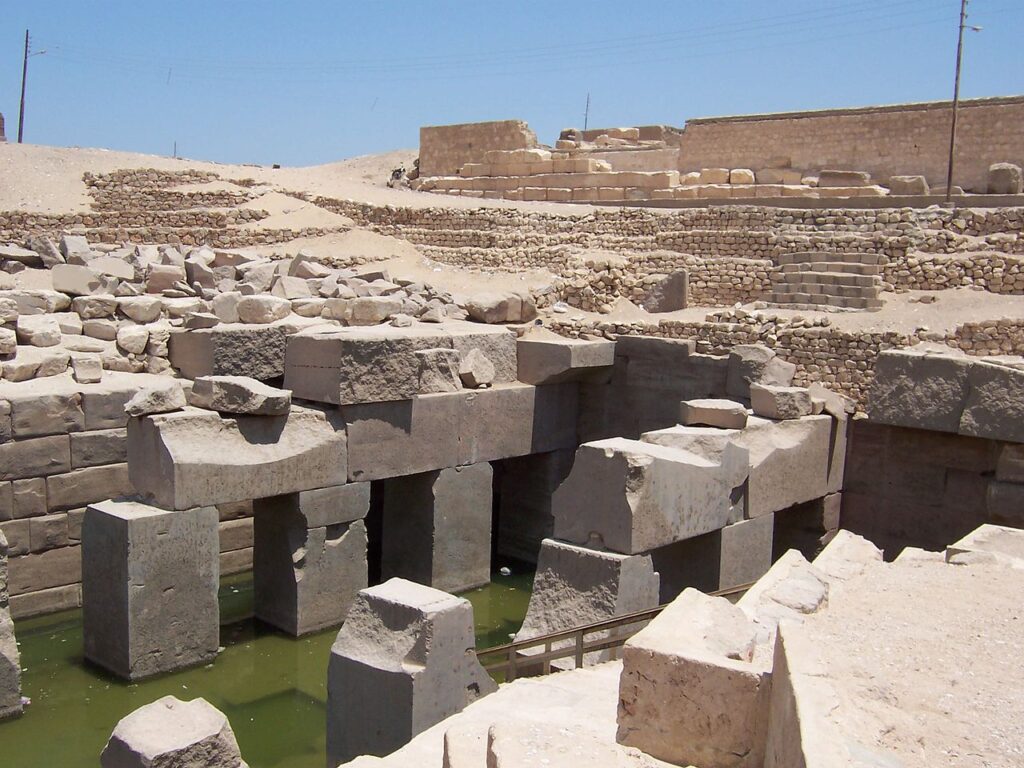
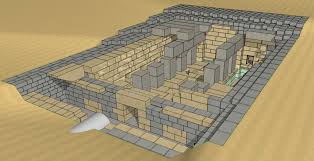
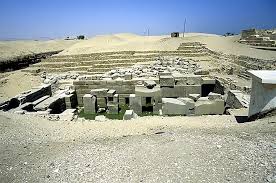
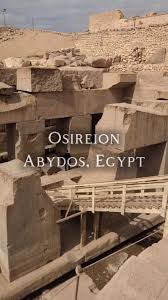
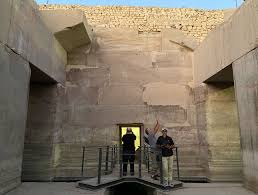
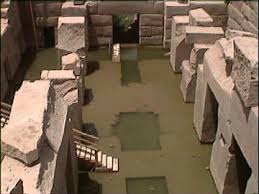
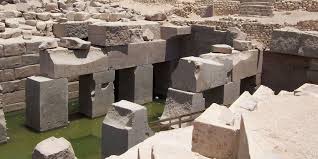
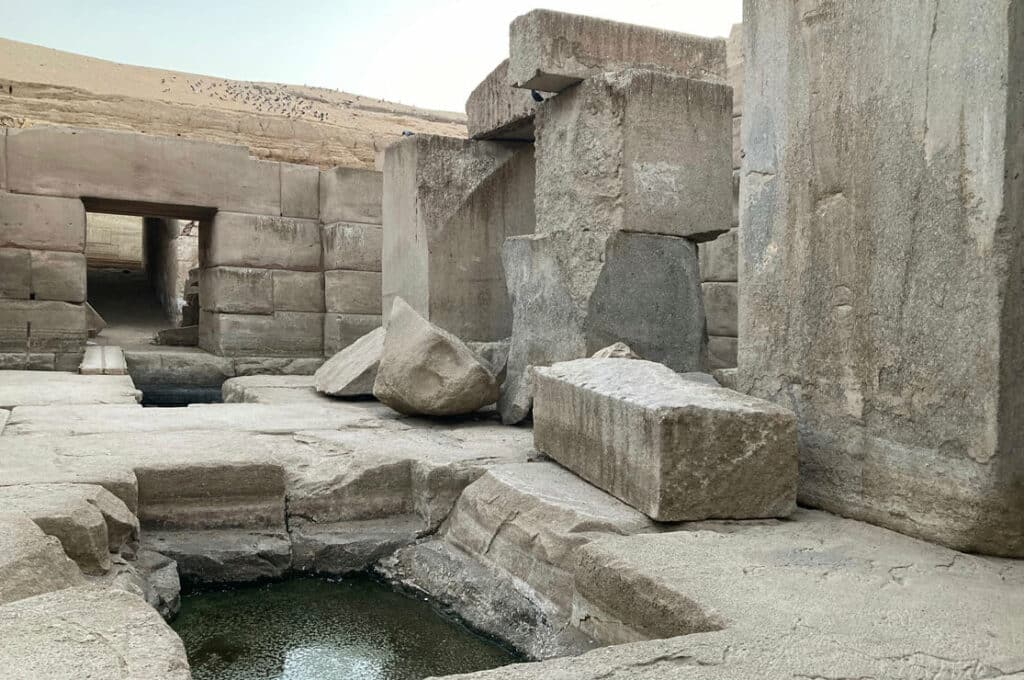
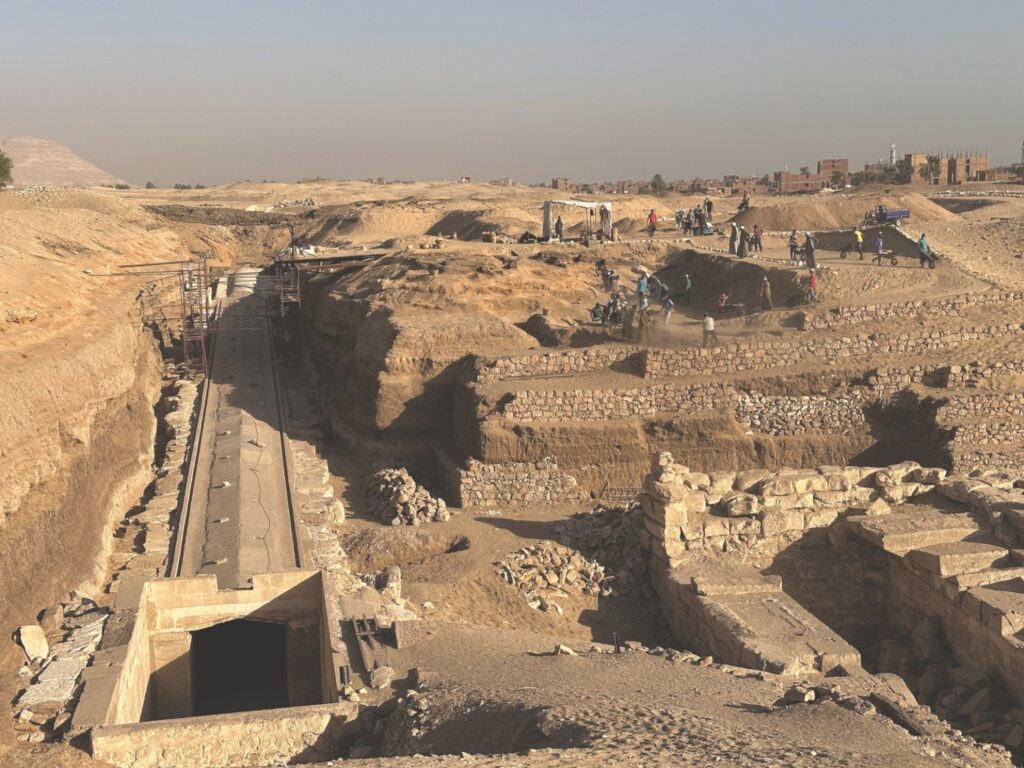
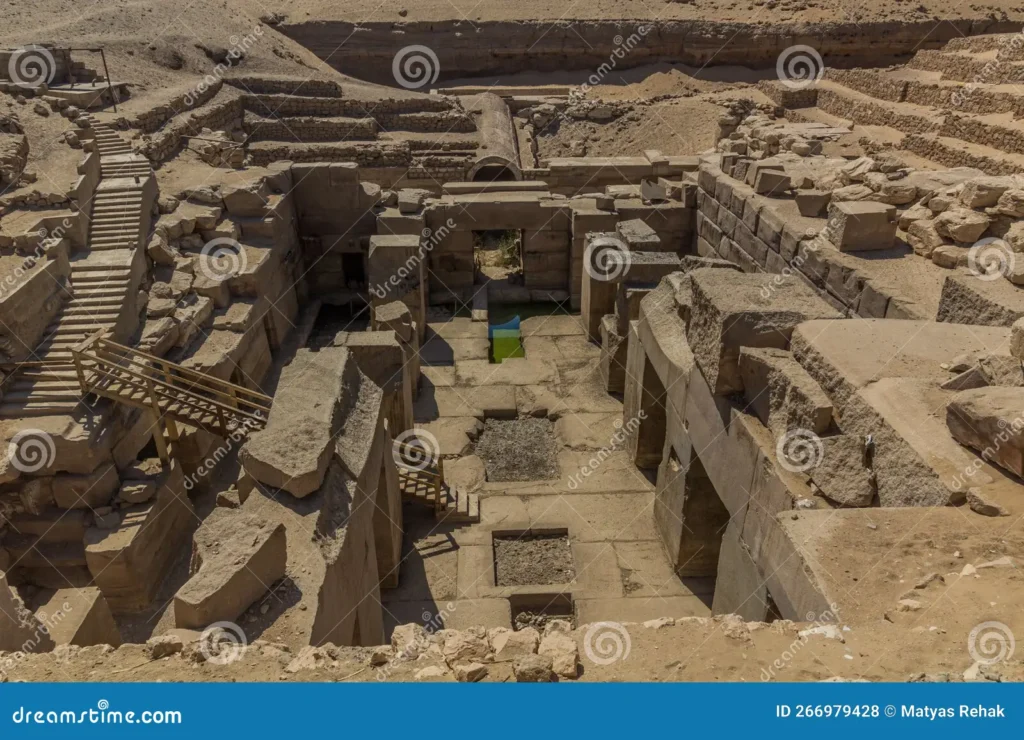
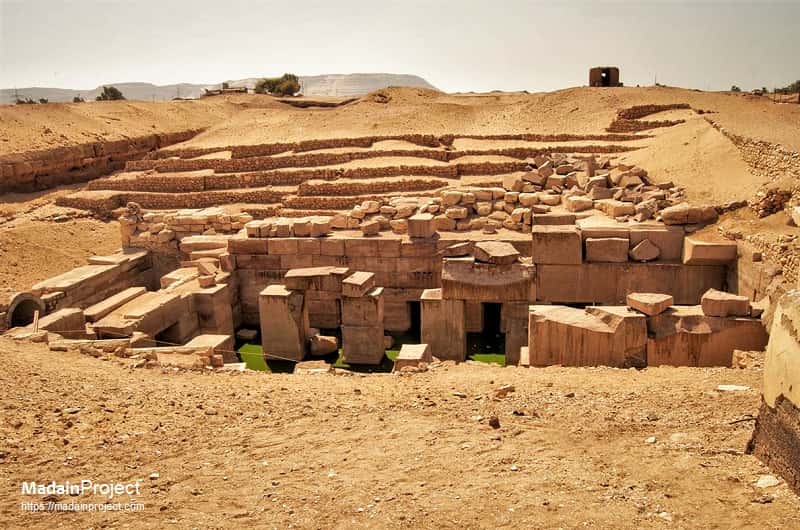
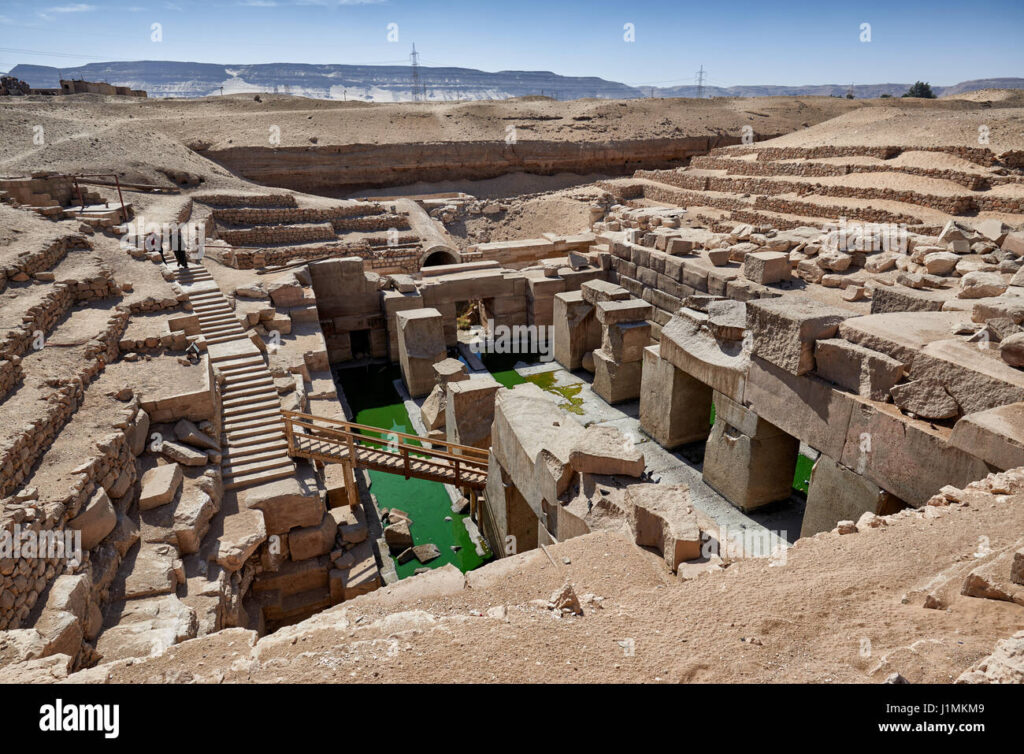
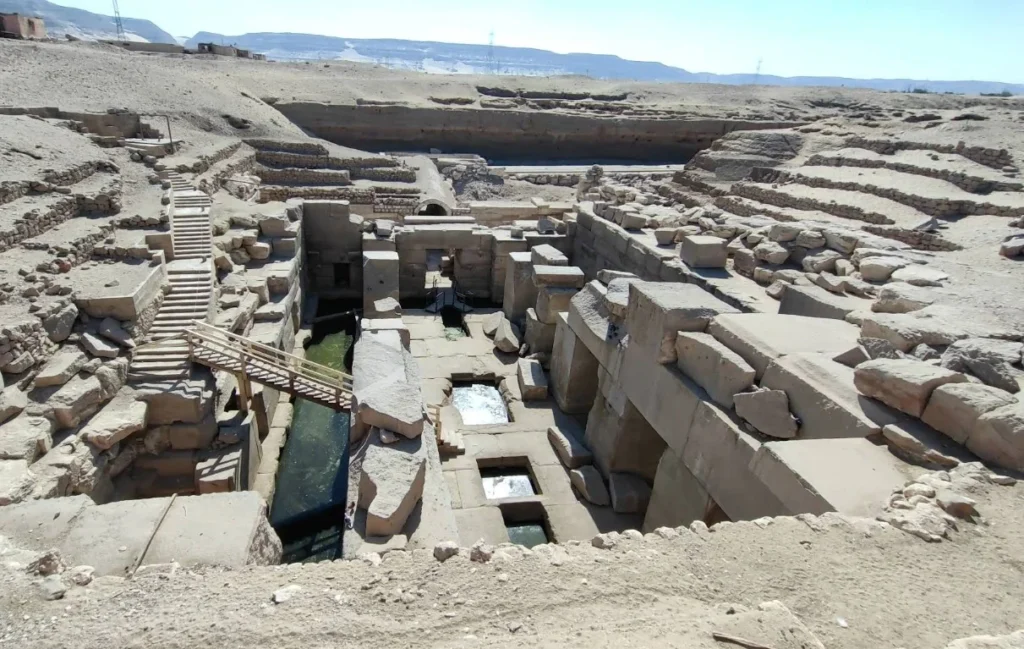
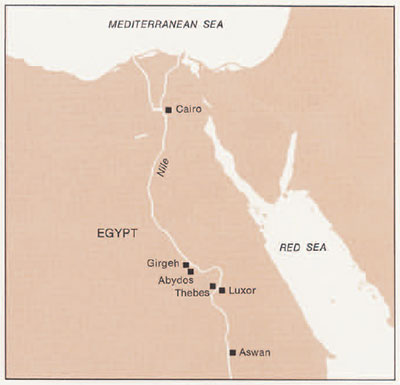
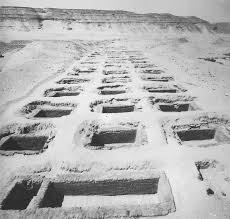
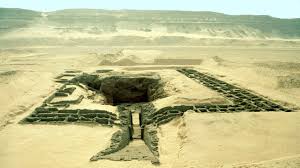
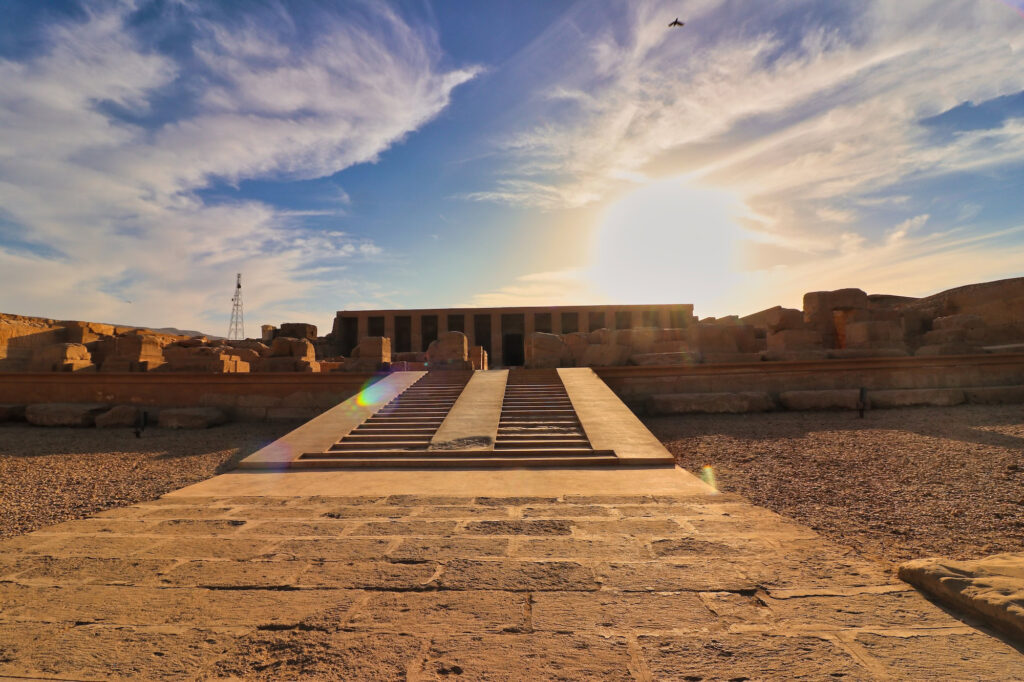
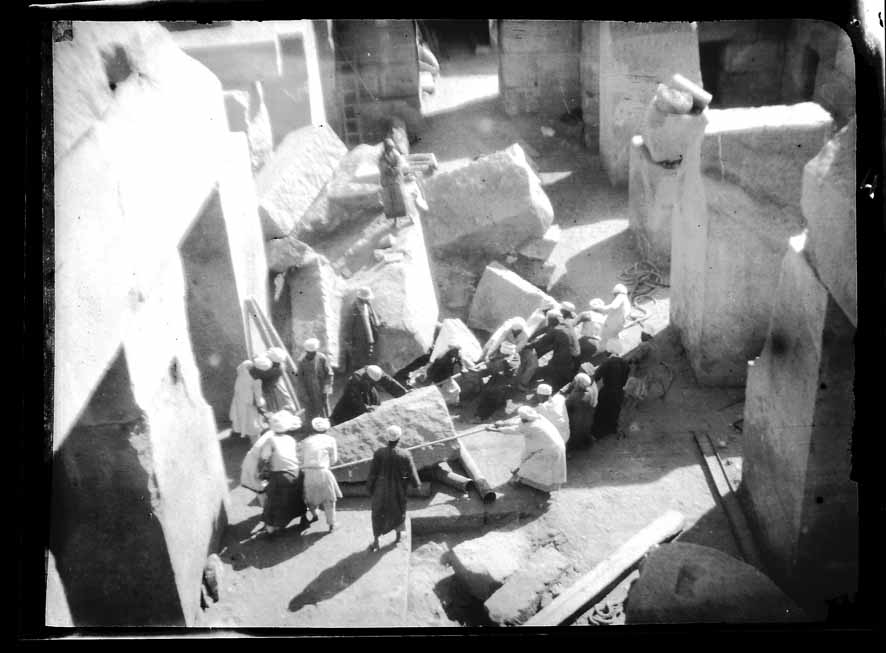
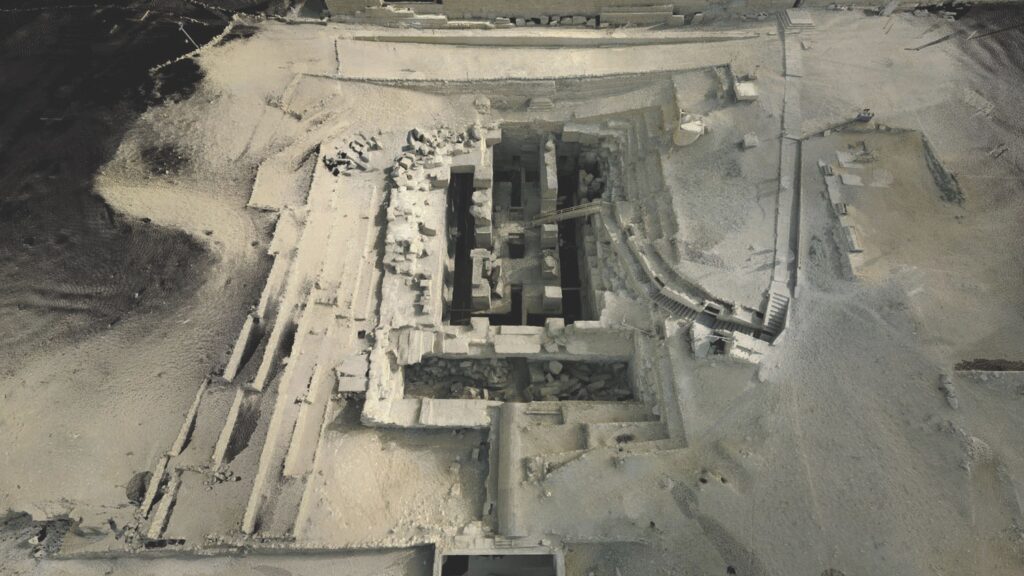
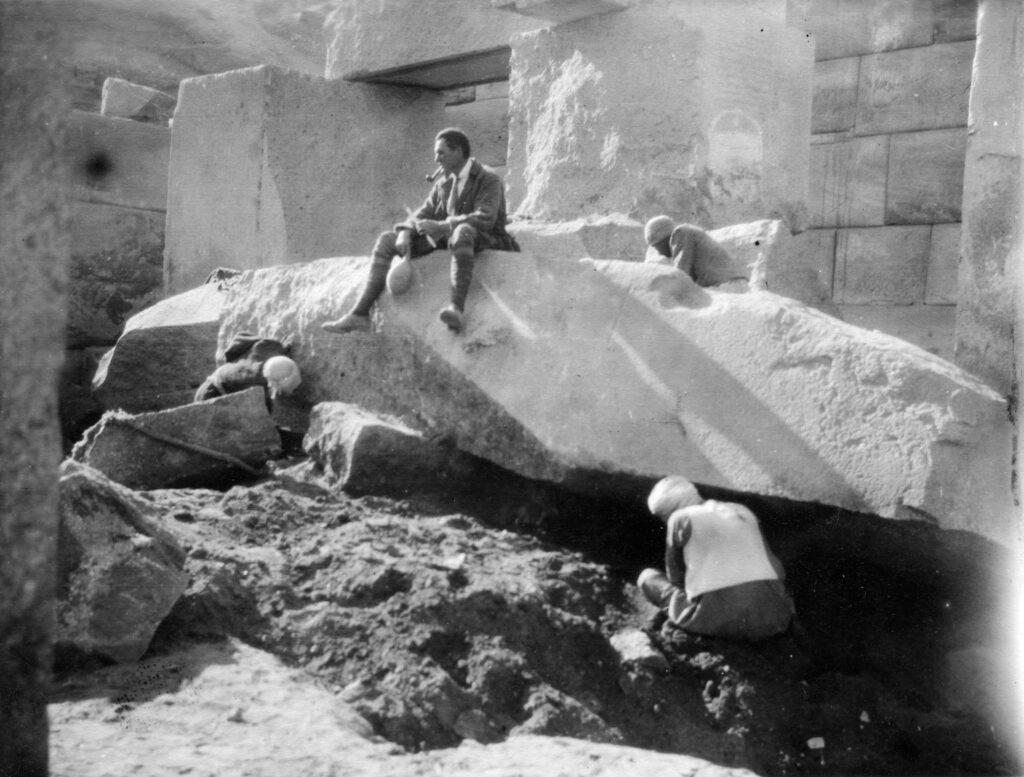
Abydos Royal Tombs – Egypt Tours PortalComponents of the Abydos Temple – Egypt Tours Portalxr:d:DAFeqiHNfqo:3,j:1826214329,t:23033010Archaeology of Abydos Temple – Egypt Tours Portal????????????????????????????????OLYMPUS DIGITAL CAMERATemple of Seti I in Abydos. Abydos is notable for the memorial temple of Seti I, which contains the Abydos of Egypt King List from Menes until Seti I’s father, Ramesses I. Egypt.xr:d:DAF99kavD60:115,j:6942719241832310137,t:24030213“The cenotaph, known as the Osireion, built by the 13th century BC pharaoh Seti I (also Sethos I, Sethi I, Sety I and Menmaatre) which occupies the west corner of his temple at Abydos. The water symbolised the water of creation while on an island in the centre stood a sarcophagus and chest for the pharaohaas organs. Begun by Seti I but completed by his son, Ramesses II (also Ramses, Rameses, Ramesses the Great and Usermaatre-setpenre), the temple of Seti I at Abydos is one of the finest buildings in Egypt.”The Osireion at the Temple of Seti l at Abydos . Egypt .Abydos Helicopter Hieroglyphs – Egypt Tours PortalAbydos King List – Egypt Tours PortalAbydos Royal Tombs – Egypt Tours PortalComponents of the Abydos Temple – Egypt Tours PortalOLYMPUS DIGITAL CAMERAAWIB-ISAW: Khasekhemwy Monument (I)One of the massive walls belonging to Khasekhemwy’s monument, or ritual precinct, where ceremonies would have occured during the king’s life as his tomb was being constructed. It has been left standing for thousands of years as an animal necropolis, supposed burial place of Osiris, and eventually even a monastic settlement. by Kyera Giannini (2009)copyright: 2009 Kyera Giannini (used with permission)photographed place: Abdju (Abydos) [http://pleiades.stoa.org/places/756512]Published by the Institute for the Study of the Ancient World as part of the Ancient World Image Bank (AWIB). Further information: [http://www.nyu.edu/isaw/awib.htm].Seated man is possibly Henri Frankfort (1897-1954), field director of the excavations in Abydos from 1925-1929 Egypt Exploration Society excavations at Abydos, Egypt, 1920s
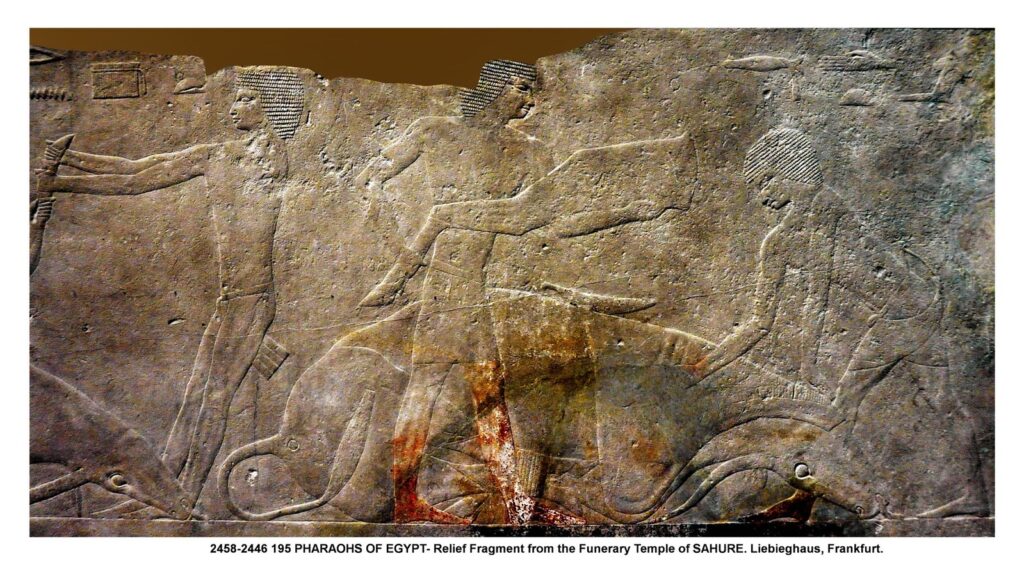
OSAMA SM AMINSandstone relief. commemorating an expedition to obtain Turquoise or copper in the reign of King Sahure. Wadi Maghara. Sinai. Egypt. Vth Dynasty. Sahure (meaning “He who is close to Re”) was an Ancient Egyptian pharaoh. the second ruler of the Fifth Dynasty. who reigned for about 12 years in the early 25th century BC. Sahure is considered to be one of the most important kings of the Old Kingdom of Egypt. his reign being a political and cultural high point of the 5th Dynasty. (Photo by: Universal History Archive/Universal Images Group via Getty Images)??????????????????????????????????????
One of six panels from the mastaba of Hesire, a high official of King Zoser who was Chief of Dentists and Physicians as well as holding other titles. He carries the tools of a scribe over his shoulder. Country of Origin: Egypt Culture: Ancient Egyptian. Date/Period: 3rd dynasty c. 2700 – 2600 BC. Place of Origin: Saqqara. Material Size: Wood 115cms high. PUBLICATIONxINxGERxSUIxAUTxHUNxONLY Copyright: WernerxForman 951_05_55401375
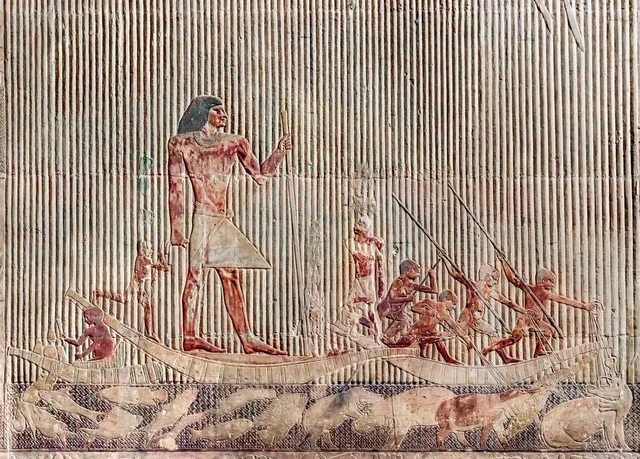
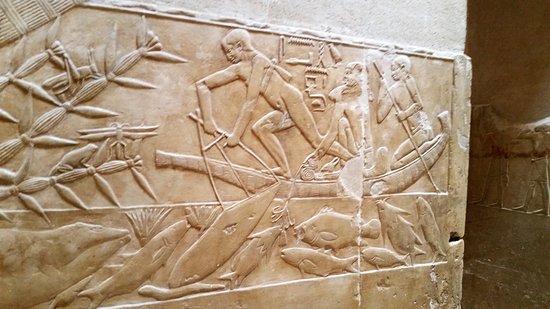
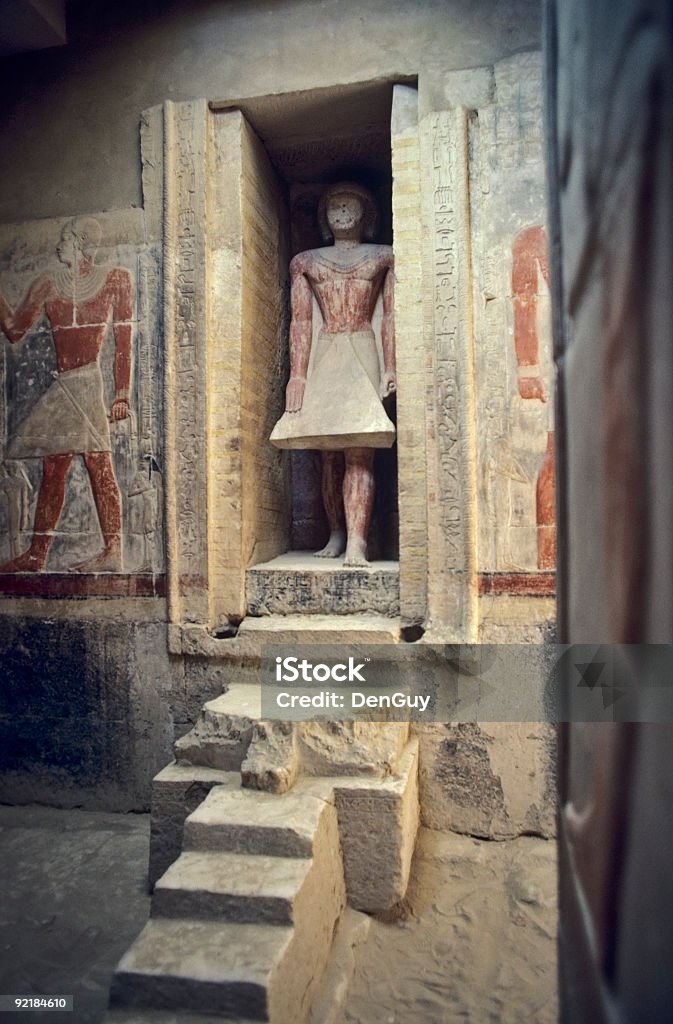
One of Six Panels from The Mastaba of Hesire a High Official of King Zoser Who what Chief of dentists and Physicians As Well As Holding Other titles he carries The Tools of a Scribe Over His Shoulder Country of ORIGIN Egypt Culture Ancient Egyptian Date Period 3rd Dynasty C 2700 2600 BC Place of ORIGIN Saqqara Material Size Wood High PUBLICATIONxINxGERxSUIxAUTxHUNxONLY Copyright WernerxForman 951_05_55401375East wall from the Tomb of Irukaptah at Saqqara . Giza .Egypt .Statue of Mereruka in the sacrifice room of the Mastaba or funerary building located in Saqqara, Cairo, Egypt.Saqqara, Egypt – December 13 2023: Painted bas relief figures showing daily life in ancient Egypt inside Tomb of Kagemni in Saqqara necropolis, Saqqara, Egypt